Did you know?
India is the world's third-largest automobile market by sales.
AutoThrust India
The latest car launches, in-depth reviews, variant price updates, and expert insights from India's roads.
Did you know?
The average car has around 30,000 individual parts.
Did you know?
India is the world's third-largest automobile market by sales.

In a shocking incident that has sent ripples through the Indian luxury car community, a Land Rover Defender owner has alleged that their premium SUV suffered a catastrophic fuel pump failure due to the use of E20 (20% ethanol-blended) petrol. As India rapidly transitions toward higher ethanol blending to reduce crude imports and emissions, this incident raises critical questions: Is our fuel infrastructure moving faster than high-end engines can adapt? And are luxury car owners paying the ultimate price for the green energy push?

Here is a comprehensive, deep-dive analysis into the Land Rover Defender breakdown incident, the science behind E20 fuel degradation, engine compatibility, and what premium car owners in India need to do to protect their multi-crore investments.
The Land Rover Defender is globally renowned as an indestructible, go-anywhere luxury off-roader. However, a recent breakdown report from an owner in India has painted a different picture. According to social media reports and automotive forums, a relatively new Defender petrol variant experienced sudden engine sputtering, loss of power, and an eventual complete stall.
Upon being towed to an authorized Jaguar Land Rover (JLR) workshop, the diagnostic team identified a failed fuel pump mechanism. The owner alleged that the service advisors informally pointed toward the high concentration of ethanol in standard petrol—specifically the newly mandated E20 fuel—as the primary catalyst for the premature wear and failure of the fuel pump components.
While JLR India has not issued an official public statement attributing the failure solely to E20 fuel, the incident has triggered intense debate among premium car buyers, enthusiasts, and mechanics across the country.
To understand why a rugged SUV like the Defender might fall victim to fuel pump failure, we must examine the chemistry of Ethanol-blended petrol.
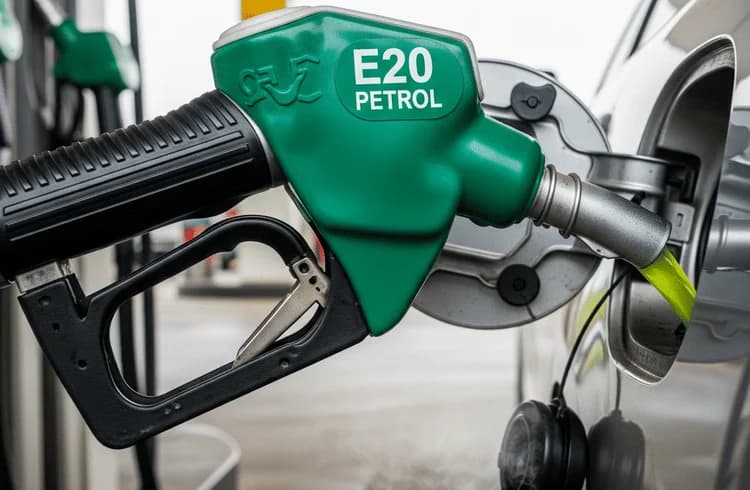
E20 petrol is a biofuel blend consisting of 80% fossil-fuel petrol and 20% ethanol (ethyl alcohol derived from sugarcane and food grains). The Government of India has aggressively rolled out E20 petrol, aiming for nationwide coverage to slash carbon emissions and lower oil import bills.
While budget hatchbacks and mass-market cars are rapidly being re-engineered to handle E20, many imported luxury vehicles feature highly sophisticated, high-pressure fuel systems designed for European or North American fuel standards, where ethanol composition is tightly monitored and often limited to E10 or lower.
Ethanol presents three major challenges to automotive fuel systems:
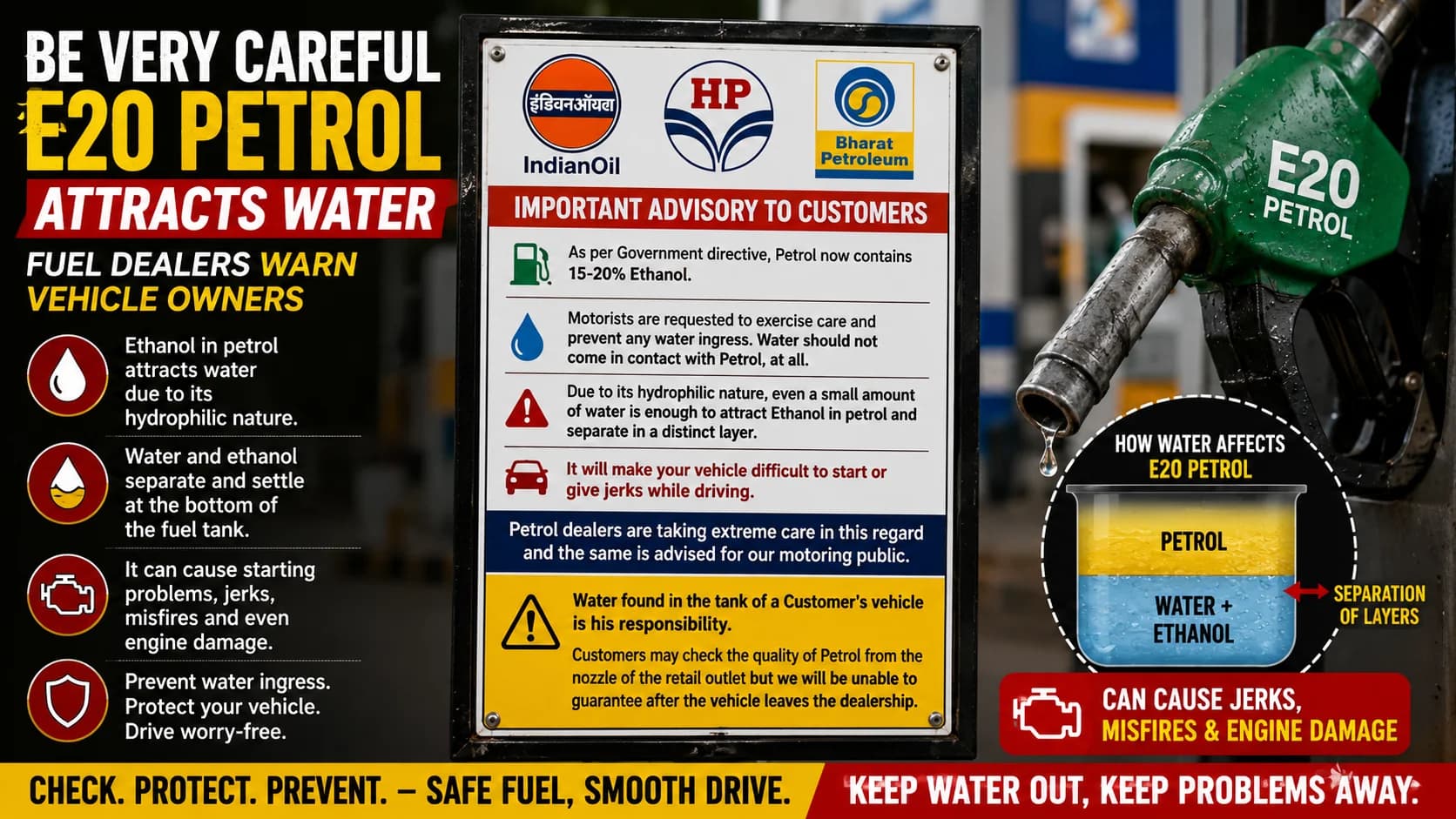
Hydroscopic Properties (Moisture Absorption): Ethanol naturally absorbs water from the atmosphere. In humid Indian conditions, this water mixes with the fuel, leading to phase separation. This water-rich mixture settles at the bottom of the fuel tank, directly entering the fuel pump, leading to rusting and lubrication loss.
Corrosivity: Ethanol is highly corrosive to certain metals (like aluminum and steel) and can degrade rubber seals, gaskets, and plastic components used in older or non-adapted fuel lines.
Lower Lubricity: High-pressure direct injection (HPDI) pumps rely on the fuel itself for lubrication. Ethanol has lower lubricating properties than pure petrol, leading to increased friction, overheating, and eventual mechanical seizure of the fuel pump.
The Land Rover Defender is offered in India with highly advanced Ingenium petrol engines. These powertrains utilize state-of-the-art high-pressure direct injection systems operating at immense pressures.
Defender P300 (2.0L 4-Cylinder Petrol):
Power: 296 BHP @ 5,500 RPM
Torque: 400 Nm @ 1,500 - 4,000 RPM
Fuel System: High-Pressure Direct Injection
Defender P400 (3.0L 6-Cylinder Mild-Hybrid Petrol):
Power: 394 BHP @ 5,500 RPM
Torque: 550 Nm @ 2,000 - 5,000 RPM
Fuel System: Twin-scroll Turbocharger with Electric Supercharger
Defender P525 (5.0L Supercharged V8 Petrol):
Power: 518 BHP @ 6,000 RPM
Torque: 625 Nm @ 2,500 - 5,500 RPM
While modern Ingenium engines manufactured after April 2023 (BS6 Phase 2 compliant) are designed to tolerate higher ethanol blends, older BS6 Phase 1 models (sold between 2020 and early 2023) were optimized primarily for E10 petrol. Using E20 in these older luxury vehicles accelerates the wear and tear of delicate fuel-delivery systems.
The Defender is imported into India via the CBU (Completely Built Unit) route, attracting hefty import duties. This makes any mechanical repair exceptionally expensive if not covered under warranty.
VariantBody StyleEngine OptionsEx-Showroom Price (INR)*Defender 903-Door SUV2.0L Petrol, 3.0L Diesel, 5.0L V8Rs. 97.00 Lakh - Rs. 2.10 CroreDefender 1105-Door SUV2.0L Petrol, 3.0L Petrol, 3.0L Diesel, V8Rs. 1.04 Crore - Rs. 2.30 CroreDefender 1308-Seater SUV3.0L Petrol, 3.0L DieselRs. 1.41 Crore - Rs. 1.46 Crore
Note: Prices are indicative and subject to change based on custom configuration and local taxes.
Given that a replacement high-pressure fuel pump assembly for a Land Rover Defender can cost upwards of INR 1.5 Lakh to 3 Lakh (including labor and taxes), owners are understandably terrified of fuel-related failures that may not always be covered under standard warranty terms if fuel contamination or non-compliant fuel usage is detected.
If you own a premium imported car or a pre-2023 luxury SUV, here is how you can mitigate the risks of E20 fuel damage:
Verify Compliance: Check your owner's manual or look at the inside of your fuel filler cap. It will clearly display "E10", "E20", or "E5" indicating the maximum ethanol tolerance of your vehicle.
Opt for Premium High-Octane Fuel: High-octane fuels like IndianOil XP95, XP100, or HPCL Power 99 often contain lower ethanol percentages or feature advanced additive packages that protect fuel lines from moisture absorption and corrosion. Always verify the ethanol content with your local fuel station manager.
Avoid Letting the Car Sit Idle: Since ethanol absorbs water over time, leaving your premium car parked for weeks with a half-empty tank of E20 petrol can cause fuel phase separation. Keep the tank full to minimize air space, or use a fuel stabilizer if storing the vehicle.
Use Fuel Additives with Caution: Some premium fuel additives claim to combat the corrosive effects of ethanol, but ensure they are officially approved by your vehicle manufacturer before adding them to your tank.
The transition to E20 fuel is an admirable environmental and economic initiative for India, but the automotive ecosystem is currently caught in a transitional phase. While mass-market manufacturers like Maruti Suzuki, Hyundai, and Tata have quickly updated their entire product lineups to be E20-compliant, premium imported cars require global engineering updates that do not always align perfectly with localized fuel changes.
The alleged fuel pump failure on the Land Rover Defender serves as a stark warning. For now, luxury car manufacturers in India must work closely with oil marketing companies (OMCs) to ensure that E10 or unblended high-octane fuel remains readily available at fuel stations. Until then, premium car owners must exercise extreme caution, keep detailed records of their fueling stations, and opt for premium fuel alternatives to safeguard their high-performance machines.
 News
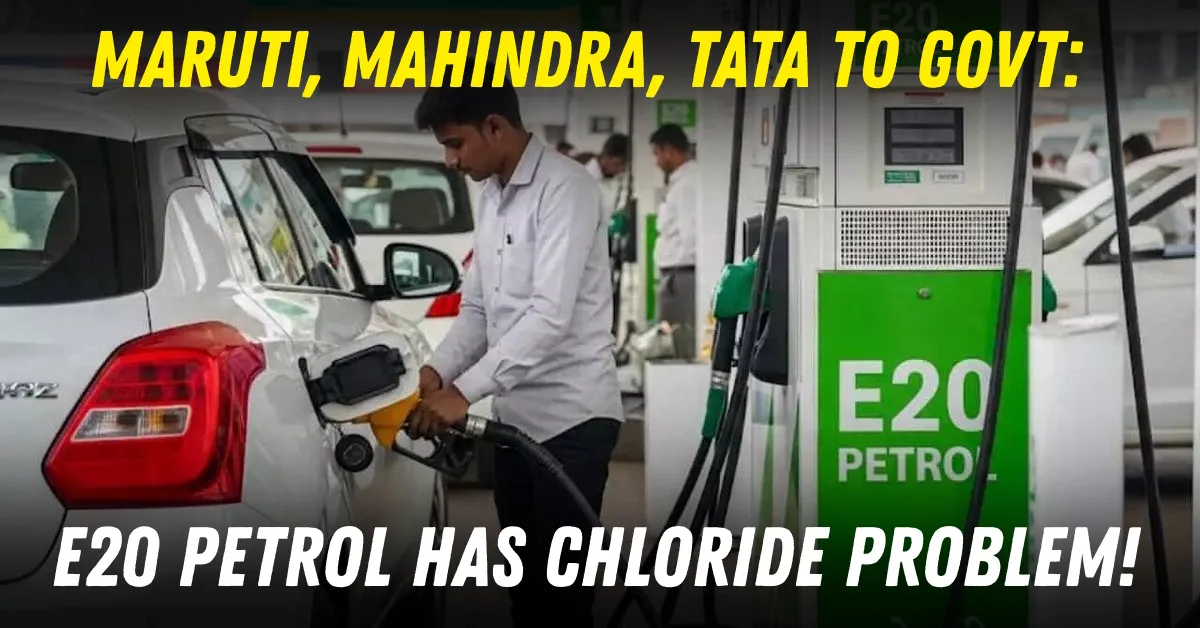
NewsIndia's biggest automakers — Maruti, Tata, Mahindra, and SIAM — have collectively raised a serious red flag: 'chloride issues' in E20 petrol. This isn't just a technical footnote; it's a direct challenge to E20's reliability and could impact your car's longevity and value.
 News
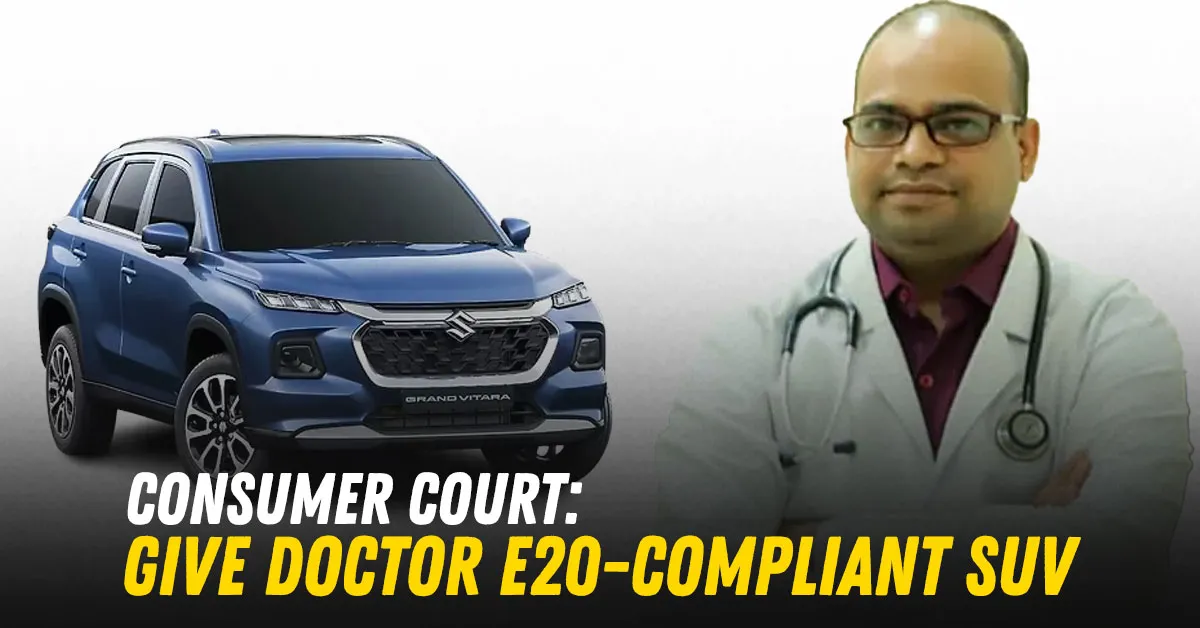
NewsA recent court order for Maruti to replace a Grand Vitara due to E20 petrol-related breakdowns sends a clear warning to Indian car buyers. We dissect what this unprecedented ruling truly means for your vehicle, E20 fuel compliance, and manufacturer responsibility.
 News
NewsOfficial data reveals Indian motorists were unknowingly using petrol with steadily increasing ethanol blends, long before E20 was formally announced. This quiet transition raises critical questions about transparency and its impact on your vehicle's performance and longevity.