Did you know?
The first speeding ticket was issued in 1896 — the driver was doing 8 mph.
AutoThrust India
The latest car launches, in-depth reviews, variant price updates, and expert insights from India's roads.
Did you know?
The fuel in your tank is technically prehistoric — fossil fuel, after all.
Did you know?
The first speeding ticket was issued in 1896 — the driver was doing 8 mph.
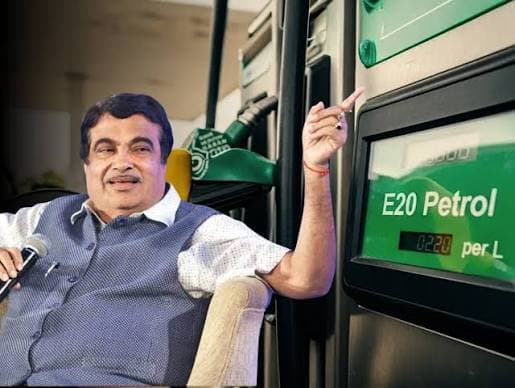
The Ministry of Petroleum and Natural Gas has made an interesting revelation about E20 petrol. According to the ministry, E20 petrol is currently more expensive to produce than regular petrol at today's global crude oil prices.
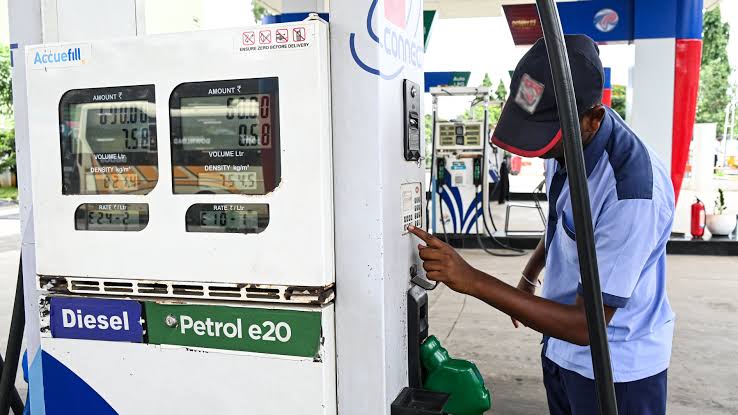
This statement comes at a time when E20 petrol has become the standard fuel across most parts of India and continues to be debated by vehicle owners.
So why does E20 cost more today, and why is the government still promoting it? Here's everything you need to know.
The ministry said the cost of producing ethanol depends on a completely different system than petrol.
At present, the government procures maize-based ethanol at ₹71.86 per litre. This price is before GST, transportation, and depot handling charges.
According to the ministry, when international crude oil prices remain around US$70 per barrel, producing E20 petrol becomes more expensive than producing pure petrol.
However, the situation changes if crude oil prices rise sharply. The ministry said that if global crude oil reaches around US$120–130 per barrel, ethanol becomes the cheaper option, making E20 petrol more economical to produce.
The answer lies in how petrol and ethanol are produced.
Ethanol is made from agricultural products such as sugarcane, maize, and damaged food grains. Its production cost mainly depends on farming, processing, and government procurement prices. These costs remain relatively stable throughout the year.
Petrol, on the other hand, is refined from crude oil. Since crude oil prices change every day based on global markets, the cost of producing petrol also keeps changing.
When crude oil prices are low, refining petrol becomes much cheaper. In such a situation, replacing a portion of petrol with ethanol—which is purchased at fixed government-supported prices—actually increases the production cost.
The ministry explained that the economics completely change when global crude oil becomes expensive.
If crude oil prices climb to around US$120–130 per barrel, the cost of producing petrol rises significantly. Ethanol production, however, remains relatively stable because it is not directly linked to international oil markets.
In that situation, blending 20 percent ethanol with petrol helps reduce the overall production cost. This also protects consumers from sudden spikes in global fuel prices.
According to the government, this strategy has already helped India during previous periods of high crude oil prices.
The ministry also highlighted several achievements of the Ethanol Blended Petrol Programme.
According to official figures, the programme has:
Saved over ₹1.97 lakh crore in foreign exchange.
Reduced crude oil imports by nearly 316 lakh metric tonnes.
Cut carbon dioxide emissions by around 952 lakh metric tonnes.
Transferred more than ₹1.66 lakh crore directly to Indian farmers.
The government believes these benefits strengthen India's energy security while reducing dependence on imported crude oil.
One of the most important parts of the ministry's statement is its acknowledgement that E20 petrol results in slightly lower fuel efficiency compared to regular petrol.
However, the government strongly rejected claims that E20 damages engines or fuel systems.
According to the ministry, the fuel underwent extensive testing before being introduced across the country. These tests covered engine durability, corrosion resistance, material compatibility, fuel system performance, and overall vehicle reliability.
Based on these studies, the government says E20 petrol is safe for approved vehicles.
The government's latest statement makes one thing clear—E20 petrol is not always cheaper to produce than regular petrol. At current crude oil prices, manufacturing E20 actually costs more because ethanol is purchased at fixed rates.
However, the government argues that the programme is designed for long-term energy security rather than short-term production costs. It believes ethanol blending helps reduce India's dependence on imported oil, supports Indian farmers, and protects consumers when global crude oil prices surge.
Even so, many vehicle owners continue to ask questions about real-world mileage, long-term maintenance costs, and the overall impact of E20 petrol on older vehicles. As the use of E20 becomes more widespread, these concerns are likely to remain part of the public discussion.
 News
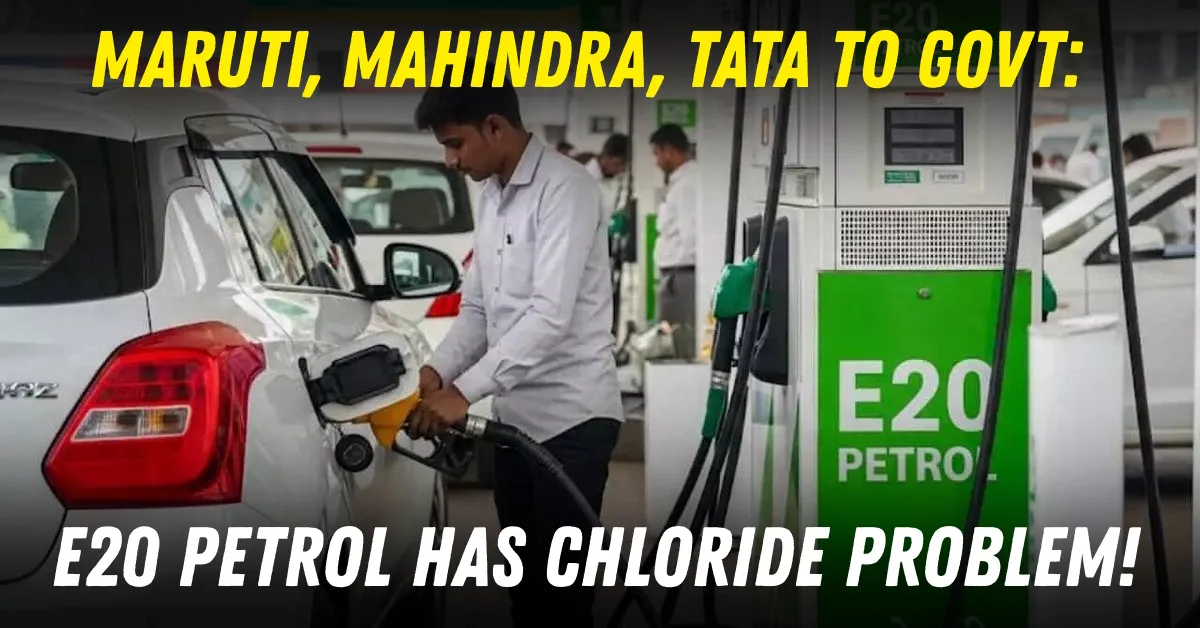
NewsIndia's biggest automakers — Maruti, Tata, Mahindra, and SIAM — have collectively raised a serious red flag: 'chloride issues' in E20 petrol. This isn't just a technical footnote; it's a direct challenge to E20's reliability and could impact your car's longevity and value.
 News
NewsA silent crisis is brewing in India's fuel stations. Excessive chloride and moisture in E20 petrol are destroying high-tech fuel systems, leaving buyers with massive repair bills.
 News
NewsA recent court order for Maruti to replace a Grand Vitara due to E20 petrol-related breakdowns sends a clear warning to Indian car buyers. We dissect what this unprecedented ruling truly means for your vehicle, E20 fuel compliance, and manufacturer responsibility.