Did you know?
The average car has around 30,000 individual parts.
AutoThrust India
The latest car launches, in-depth reviews, variant price updates, and expert insights from India's roads.
Did you know?
The first speeding ticket was issued in 1896 — the driver was doing 8 mph.
Did you know?
The average car has around 30,000 individual parts.
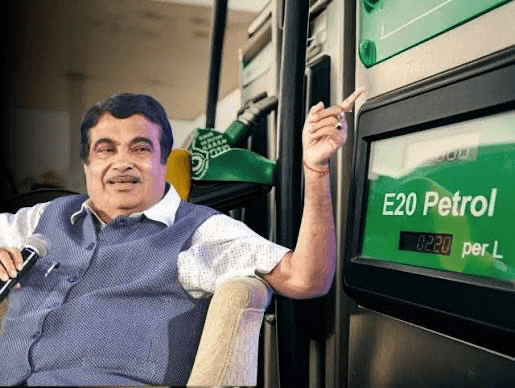
The Government of India has clarified that it never described the country's E20 (20% ethanol-blended petrol) programme as an "experiment" before the Supreme Court. The clarification came after several media reports claimed that the government had made such a statement during an ongoing court hearing.
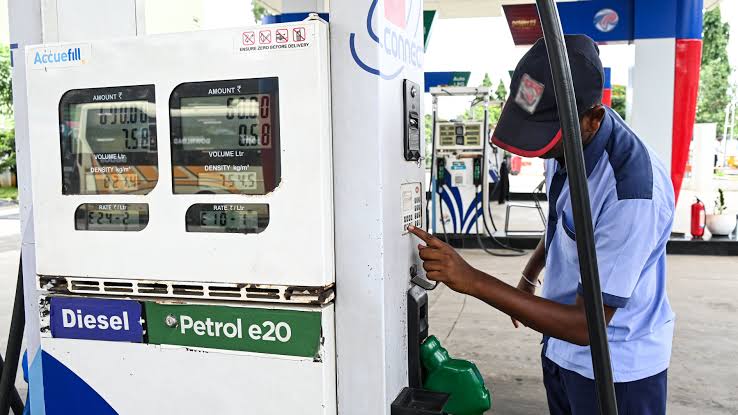
The Office of the Attorney General for India has called these reports "completely false", stating that they do not reflect what was actually presented before the Court.
The government also stressed that the Ethanol Blended Petrol (EBP) Programme is a well-planned national policy aimed at reducing fuel imports, cutting emissions, and increasing the use of cleaner fuels across the country.
The case is not about whether E20 petrol is valid or not. Instead, it is related to the allocation of ethanol supplied to Oil Marketing Companies (OMCs).
Several ethanol manufacturers have approached different High Courts, claiming that OMCs are not purchasing the quantity of ethanol they had expected. The issue has now reached the Supreme Court.
The central government has clarified that the dispute is about ethanol allocation and has nothing to do with the E20 policy itself.
When India announced its E20 target a few years ago, producing enough ethanol was considered a challenge.
To increase production, the government introduced several incentives, including:
Easy loans for ethanol projects
Interest subsidies
Faster environmental clearances
Support for setting up new ethanol plants
These benefits encouraged many private companies to invest in ethanol production.
As a result, India successfully achieved its E20 blending target. However, production capacity has now grown beyond current demand, creating an oversupply of ethanol.
Oil Marketing Companies only need enough ethanol to meet the current 20% blending target.
Since ethanol producers cannot freely sell their extra production to other buyers, many are left with surplus stock. This has led several manufacturers to seek higher purchase allocations through the courts.
The present Supreme Court case is linked to an order by the Karnataka High Court, which had directed OMCs to consider increasing ethanol allocation for a distillery.
The central government challenged this order, arguing that changing allocations for one company could lead to similar demands from many others and disrupt the existing allocation system.
The government has also requested the Supreme Court to transfer similar cases pending in different High Courts into a single case for a uniform decision.
The government is expected to finalise new annual ethanol supply contracts from October 2026, making an early court decision important.
Experts believe that one long-term solution could be increasing the use of higher ethanol blends such as:
E22
E30
E85
E100
If these fuels are introduced in the future, they could help absorb excess ethanol production.
Industry experts also believe that better planning and more transparent allocation systems can prevent such situations in the future.
For now, the Supreme Court has directed all parties to maintain status quo, meaning the existing ethanol allocation process will continue until the matter is decided.
The final verdict is expected to provide clarity for both ethanol producers and oil marketing companies before the next procurement cycle begins.
The government has made its position clear.
According to the Office of the Attorney General, E20 is not an experiment or a trial programme. It is an approved national policy that has already undergone testing before being introduced across the country.
The government has already completed testing for E20 and published its findings. Meanwhile, research is continuing on higher ethanol blends such as E22, E25, E27 and E30, which could be introduced in the future if they prove successful.
The recent controversy was triggered by reports claiming that the government had referred to E20 petrol as an "experiment" before the Supreme Court. However, the government has strongly denied these claims, stating that the reports were inaccurate.
The ongoing legal dispute is focused on ethanol allocation between producers and oil marketing companies, not on the E20 fuel programme itself. As India continues to expand the use of cleaner fuels, the Supreme Court's final decision will play an important role in shaping the future of ethanol procurement and the country's biofuel strategy.
 News
NewsFor most first-time buyers in India, a bike in the ₹1 lakh to ₹1.5 lakh range hits the sweet spot, powerful enough for daily commutes and highway rides, yet light on the wallet in terms of both price and running costs. Here’s our pick of the best options currently available
 News
NewsUnion Minister Nitin Gadkari has fiercely defended India's E20 ethanol blending mandate, calling criticism 'sponsored propaganda,' even as vehicle owners worry about fuel efficiency and engine longevity. We break down the government's stance and what this standard fuel means for your daily drive and long-term car care.