Did you know?
The McLaren F1 still holds the record as the fastest naturally-aspirated car.
AutoThrust India
The latest car launches, in-depth reviews, variant price updates, and expert insights from India's roads.
Did you know?
Volkswagen means 'people's car' in German.
Did you know?
The McLaren F1 still holds the record as the fastest naturally-aspirated car.
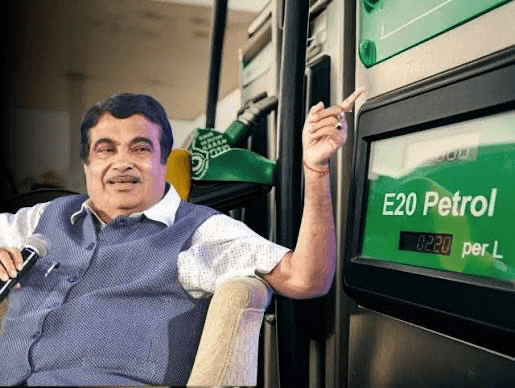
The debate around ethanol-blended petrol continues to gain momentum across India, with social media flooded by videos claiming that E20 fuel is causing problems in vehicles. Amid the growing concerns, the Central Government has clarified before the Supreme Court that the E20 fuel programme is still being evaluated and that its long-term results are expected to become clearer by 2027.
The statement was made by Attorney General R. Venkataramani during a hearing related to a petition filed by Bharat Petroleum Corporation Limited (BPCL). The petition challenged an order of the Karnataka High Court concerning ethanol allocation for the 2025–26 supply year.
While presenting the government's position, the Attorney General told the court that the 20 per cent ethanol blending programme is effectively an ongoing exercise. According to him, the government is closely monitoring its performance, and meaningful conclusions about the initiative will emerge only after sufficient real-world data is available, which is expected by next year.
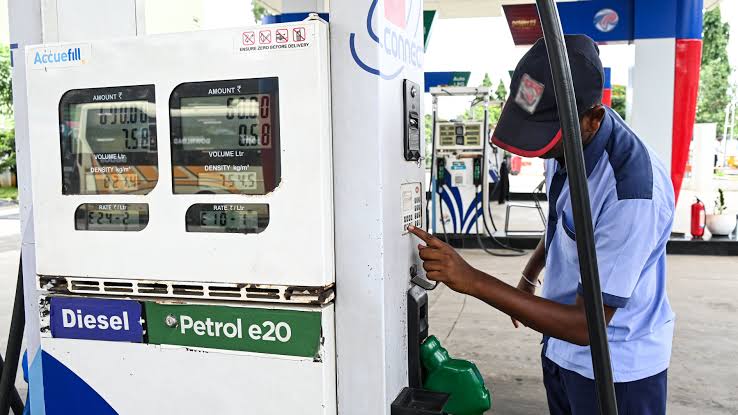
Following the court proceedings, Venkataramani clarified that his remarks should not be interpreted as a rollback or reconsideration of the government's ethanol policy. He explained that the Centre remains committed to the E20 blending programme and that the target of supplying petrol blended with 20 per cent ethanol remains unchanged.
However, he added that the amount of ethanol allocated to different oil marketing companies may vary depending on availability, demand, and other operational requirements.
India successfully introduced E20 petrol across the country much earlier than initially planned. The nationwide rollout was completed several years ahead of the government's original target, making India one of the fastest countries to implement ethanol blending at this scale.
The Centre is already looking beyond E20 and has announced plans to increase the ethanol content in petrol to 30 per cent by 2030. The broader objective is to reduce India's dependence on imported crude oil, lower carbon emissions, and create additional income opportunities for farmers by increasing demand for crops such as sugarcane and maize that are used in ethanol production.
The Attorney General's comments come at a time when several videos circulating online claim that E20 petrol is responsible for engine problems, reduced performance, and increased maintenance costs.
In response to these claims, the Ministry of Petroleum and Natural Gas (MoPNG) recently issued a clarification stating that many of the posts being shared on social media contain misleading or unverified information. According to the ministry, several old videos and images are being reshared without context, creating unnecessary concern among vehicle owners.
The ministry also addressed rumours suggesting that using E20 fuel could void vehicle insurance policies. After consulting relevant stakeholders, it stated that these claims were found to be incorrect and advised consumers not to rely on unverified information circulating online.
Ethanol is a renewable biofuel produced from agricultural sources such as sugarcane, corn, and other biomass. It is blended with petrol primarily to reduce fossil fuel consumption, lower exhaust emissions, and improve India's energy security by reducing dependence on imported crude oil.
At the same time, ethanol has certain characteristics that require attention. One of them is its hygroscopic nature, which means it can absorb moisture from the surrounding atmosphere. While modern vehicles designed for E20 fuel are engineered to handle this property, older vehicles that were not originally developed for higher ethanol blends may require additional care and maintenance if exposed to ethanol-rich fuel over extended periods.
The government's latest submission to the Supreme Court indicates that while the E20 programme is already being implemented nationwide, authorities are continuing to monitor its real-world impact. With comprehensive data expected by 2027, policymakers will have a clearer picture of how higher ethanol blends affect vehicles, fuel efficiency, emissions, and overall performance.
Until then, the Centre has reiterated that its commitment to ethanol blending remains unchanged, even as it continues to evaluate the programme's long-term outcomes through ongoing monitoring and scientific assessment.
 News
NewsFor most first-time buyers in India, a bike in the ₹1 lakh to ₹1.5 lakh range hits the sweet spot, powerful enough for daily commutes and highway rides, yet light on the wallet in terms of both price and running costs. Here’s our pick of the best options currently available
 News
NewsUnion Minister Nitin Gadkari has fiercely defended India's E20 ethanol blending mandate, calling criticism 'sponsored propaganda,' even as vehicle owners worry about fuel efficiency and engine longevity. We break down the government's stance and what this standard fuel means for your daily drive and long-term car care.