Did you know?
Lamborghini originally built tractors before making supercars.
AutoThrust India
The latest car launches, in-depth reviews, variant price updates, and expert insights from India's roads.
Did you know?
The first speeding ticket was issued in 1896 — the driver was doing 8 mph.
Did you know?
Lamborghini originally built tractors before making supercars.
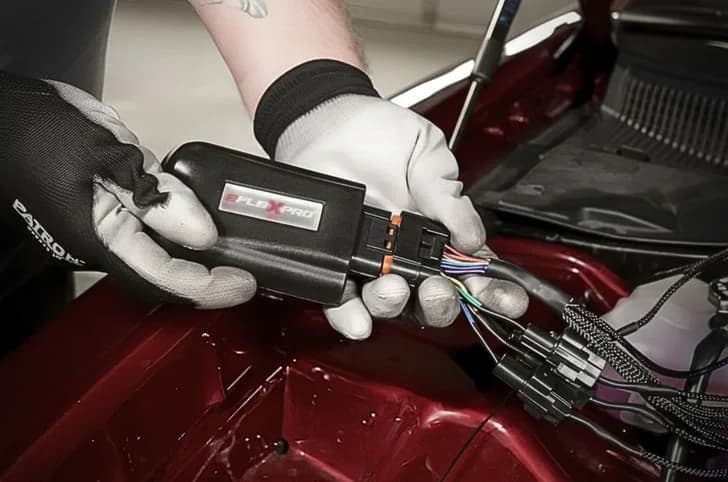
India's push towards cleaner and more sustainable fuels could soon become more accessible for millions of petrol car owners. According to the Indian Sugar & Bio-energy Manufacturers Association (ISMA), locally manufactured ethanol conversion kits may cost as little as ₹15,000, making it significantly cheaper for existing petrol vehicles to run on high-ethanol fuels such as E85 and E100.
The announcement comes as India continues expanding its ethanol blending programme beyond the current E20 standard. If approved by regulators, these conversion kits could allow owners of compatible BS4 and BS6 petrol vehicles to use higher ethanol blends without purchasing a brand-new flex-fuel vehicle.
Locally Made Conversion Kits Could Cost Around ₹15,000
Speaking to Autocar Professional, ISMA Director General Deepak Ballani said that ethanol conversion kits manufactured in India are expected to cost approximately ₹15,000 for consumers.
Currently, imported ethanol conversion kits available through international online marketplaces are priced between ₹40,000 and ₹60,000, making them too expensive for widespread adoption.
According to Ballani, local manufacturing and higher production volumes could significantly reduce costs, making the technology affordable for everyday car owners.
What Is an Ethanol Conversion Kit?
An ethanol conversion kit is an electronic system that enables a standard petrol-powered vehicle to safely operate on higher ethanol blends.
The kit includes an ethanol sensor that continuously measures the ethanol concentration in the fuel. Based on this reading, it automatically adjusts the engine's fuel injection system to maintain optimal performance.
This allows vehicles to seamlessly switch between fuels such as:
- E15
- E20
- E50
- E85
- E100
without requiring separate ECU tuning for each blend.
ISMA Tests Imported Kits on BS4 and BS6 Cars
To evaluate the feasibility of ethanol conversion kits for Indian conditions, ISMA conducted a joint study with IIT Delhi.
The organisation retrofitted imported Finland-based eFlexFuel conversion kits onto two Maruti Suzuki models:
- BS4 Maruti Swift (originally E10 compatible)
- BS6 Maruti Dzire (E20 compatible)
Both vehicles were extensively tested across multiple ethanol blends ranging from E15 to E100.
More Than 10,000 km of Real-World Testing
The evaluation wasn't limited to laboratory testing.
The BS4 Swift completed 10,500 km, including approximately 1,000 km on pure E100 ethanol.
Meanwhile, the BS6 Dzire covered 14,250 km, with nearly 5,000 km driven exclusively on E100 fuel.
The long-distance trials were designed to assess how the vehicles performed under real-world driving conditions.
What Did The Tests Reveal?
Researchers monitored a wide range of vehicle parameters throughout the testing period, including:
- Engine starting behaviour
- Acceleration and deceleration
- Fuel consumption
- Engine health
- Real-time drivability
- Exhaust emissions
- Overall durability
According to the report, neither vehicle exhibited abnormal behaviour during the testing programme.
ISMA stated that both cars operated normally across different ethanol blends without showing signs of mechanical damage or significant performance issues.
Existing BS4 and BS6 Cars Could Potentially Become Flex-Fuel Vehicles
Based on the findings, ISMA believes that many existing BS4 and BS6 petrol vehicles could potentially be converted into flex-fuel vehicles using approved ethanol conversion kits.
According to Deepak Ballani, the tested vehicles successfully operated on fuels ranging from conventional petrol to E100 ethanol without damaging the engine.
If eventually approved, the technology could provide a practical upgrade path for millions of petrol vehicle owners instead of requiring them to purchase new flex-fuel cars.
Why This Matters
India has already adopted E20 petrol as the national standard, and E85 fuel has recently begun rolling out in selected cities for compatible flex-fuel vehicles.
However, only a handful of factory-built flex-fuel vehicles are currently available in the Indian market.
Conversion kits could bridge this gap by enabling existing petrol vehicles to use higher ethanol blends, potentially lowering running costs while supporting the government's ethanol blending targets.
Commercial Launch Still Some Time Away
Despite the encouraging test results, ethanol conversion kits are not yet approved for commercial sale in India.
Ballani clarified that imported kits were used only for research purposes.
Before locally manufactured kits reach customers, they must undergo:
- Regulatory approval
- Certification by automotive testing agencies
- Validation by vehicle manufacturers
- Safety and durability testing under Indian conditions
ISMA has already approached the concerned government authorities to establish a framework for testing, certification, localisation, and approval of ethanol conversion kits.
Challenges Ahead
Although the technology appears promising, several challenges remain before widespread adoption becomes possible.
Vehicle manufacturers will need to ensure compatibility with different engine types, while regulators must establish clear standards for installation, emissions compliance, warranty implications, and long-term reliability.
Service infrastructure and technician training will also play an important role in ensuring safe installation and maintenance of these kits.
The Bottom Line
Ethanol conversion kits could become an affordable solution for Indian petrol car owners looking to transition towards higher ethanol fuels without replacing their existing vehicles. With locally manufactured kits expected to cost around ₹15,000, the technology has the potential to significantly expand access to flex-fuel capability.
However, commercial availability is still some distance away. Before reaching the market, these kits must receive regulatory approvals, undergo comprehensive testing, and meet safety standards laid down by automotive authorities. If successfully implemented, ethanol conversion kits could become an important step in India's transition towards cleaner, more sustainable transportation.
 News
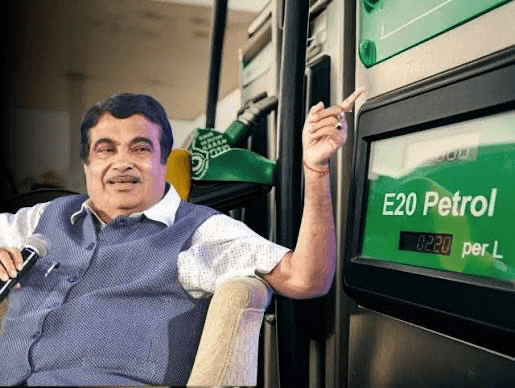
NewsThe Central Government has informed the Supreme Court that the nationwide rollout of E20 petrol is still under evaluation. According to the government, the real-world impact of 20% ethanol-blended fuel on vehicles and emissions will be assessed over time, with comprehensive results expected by 2027.
 News
NewsBMW India's CEO Vikram Pawah has delivered a stark reality check for Indian car owners, confirming that existing petrol vehicles cannot be retrofitted to run on E30 fuel.
 News
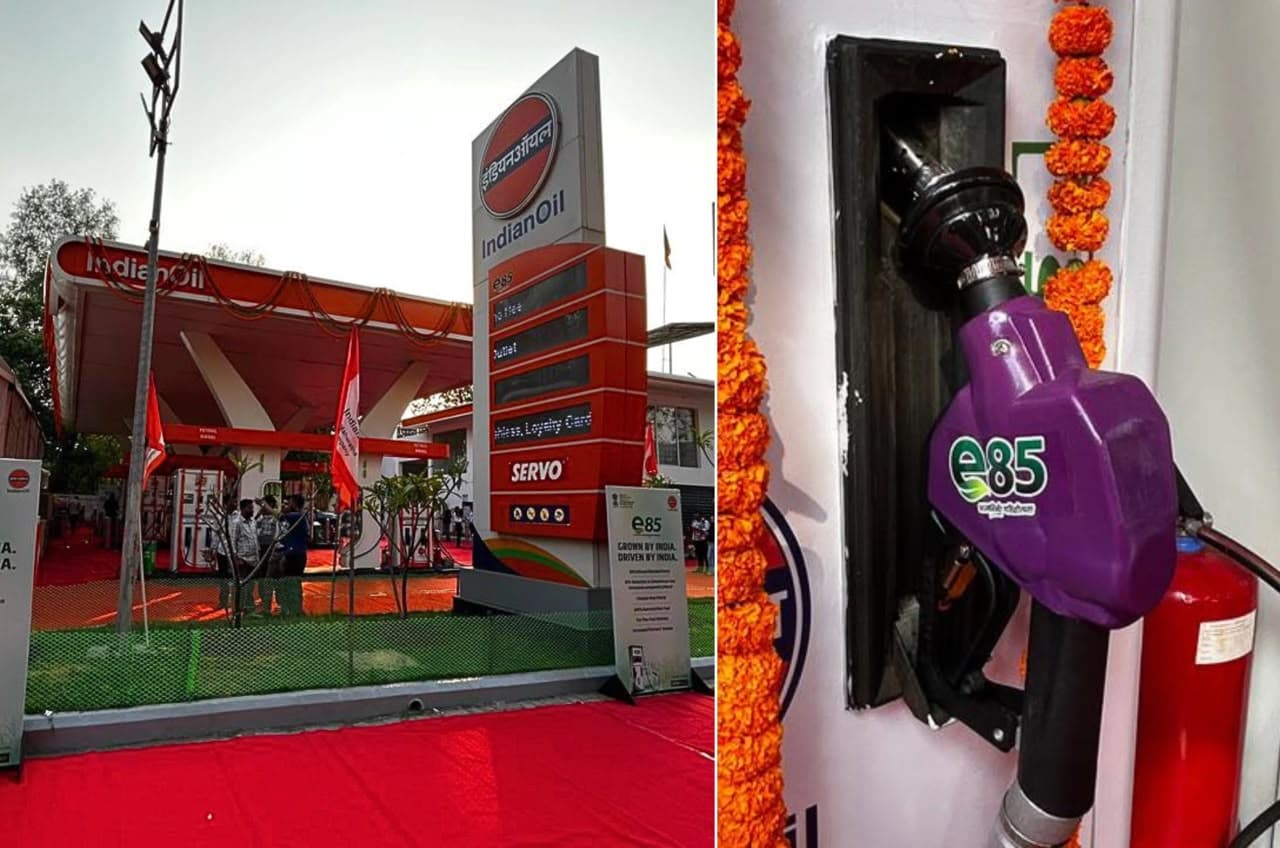
NewsE85 ethanol-blended fuel has officially arrived in Mumbai, priced at ₹91.18 per litre. While regular petrol currently sold in India contains up to 20 percent ethanol (E20), E85 significantly raises the ethanol content to 85 percent.