Did you know?
The fuel in your tank is technically prehistoric — fossil fuel, after all.
AutoThrust India
The latest car launches, in-depth reviews, variant price updates, and expert insights from India's roads.
Did you know?
A car's tyres can heat up to over 100°C during hard track driving.
Did you know?
The fuel in your tank is technically prehistoric — fossil fuel, after all.
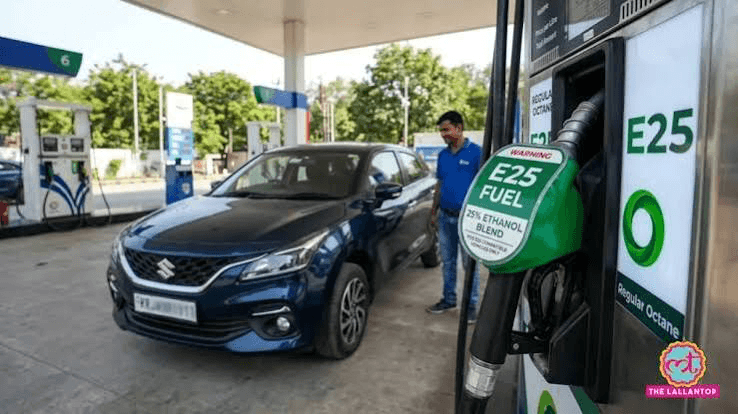
India has already rolled out E20 petrol (20% ethanol-blended fuel) across the country, and now the government has taken the next step in its ethanol blending roadmap. The Automotive Research Association of India (ARAI) has officially started testing E25 petrol, which contains 25% ethanol, to study its long-term impact on vehicles.
The tests will be conducted on both E10- and E20-compatible vehicles, covering a total distance of 1.5 lakh kilometres before any decision is taken on introducing E25 in India.
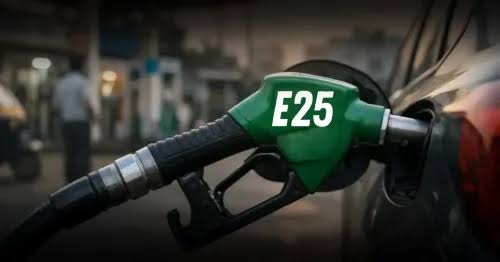
ARAI, one of India's leading automotive testing agencies, has been entrusted with evaluating the performance of E25 petrol under real-world conditions.
During the testing, the organisation will closely examine:
Engine performance
Fuel efficiency
Engine durability
Vehicle reliability
Overall health of vehicle components
The study will continue until the test vehicles complete 1,50,000 kilometres. After that, ARAI will prepare a comprehensive report based on the findings.
The report will then be reviewed by the International Centre for Automotive Technology (ICAT). Once validated, it will be submitted to the Ministry of Petroleum and Natural Gas, which will make the final decision on whether E25 petrol should be introduced across the country.
The government's long-term objective is to reduce India's dependence on imported crude oil while increasing the use of domestically produced ethanol.
Since the nationwide rollout of E20 petrol has already been completed, the next logical step is to evaluate whether vehicles can safely use higher ethanol blends.
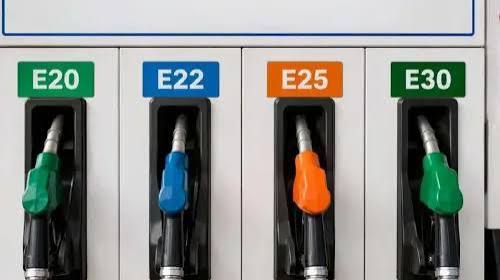
To support future adoption, the Bureau of Indian Standards (BIS) has already notified fuel quality standards for:
E22
E25
E27
E30
Additionally, the government has waived central excise duty on these higher ethanol blends, making it easier to introduce them whenever required.
However, this does not mean E25 petrol will reach fuel stations anytime soon. It is still at the testing stage.
Although the government is moving ahead with higher ethanol blends, the transition is expected to be carefully planned.
The rollout of E20 petrol has received mixed feedback from some vehicle owners. Common concerns include:
Lower fuel efficiency
Compatibility with older vehicles
Long-term engine durability
While both the government and automobile manufacturers have repeatedly stated that E20 does not harm vehicles designed for it, public concerns have made authorities more cautious before approving a higher ethanol blend.
Even after ARAI completes its study, E25 petrol will still need to clear several additional evaluations.
These include:
Engine validation
Component durability testing
Emission compliance
Real-world driving assessments
According to industry experts, these additional evaluations could take another three to six months after ARAI submits its report.
Higher ethanol blending is expected to benefit ethanol manufacturers significantly.
India currently has more ethanol production capacity than what is required for E20 blending, resulting in surplus supply.
Industry estimates suggest that:
E22 could increase ethanol demand by around 120 crore litres every year.
E25 could increase annual demand to nearly 300 crore litres.
Industry bodies have also recommended increasing the production of flex-fuel vehicles, which are better suited to operate on higher ethanol blends.
For now, there is no need to worry.
E25 petrol is only under testing, and the government has not announced any launch timeline.
Before introducing E25, the government will wait for:
Completion of ARAI's 1.5 lakh km testing programme
Validation of the report by ICAT
Final approval from the Ministry of Petroleum and Natural Gas
Until then, E20 petrol will continue to remain India's standard fuel blend.
The testing of E25 petrol marks another important milestone in India's journey towards cleaner and more sustainable fuels. By studying its impact over 1.5 lakh kilometres, the government aims to ensure that higher ethanol blends are safe for vehicles before making any policy decision.
Although E25 is still some time away from reaching fuel stations, the ongoing tests will play a key role in shaping the future of ethanol-blended fuels in India. Until then, motorists can continue using E20 petrol without any immediate changes.
 News
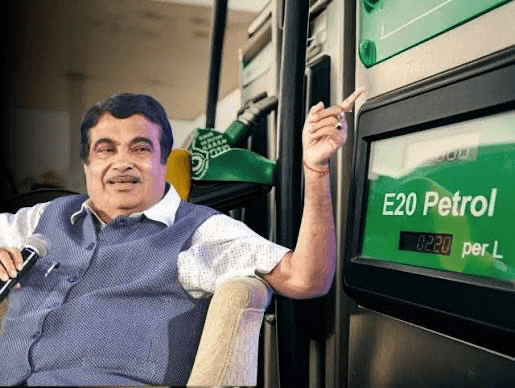
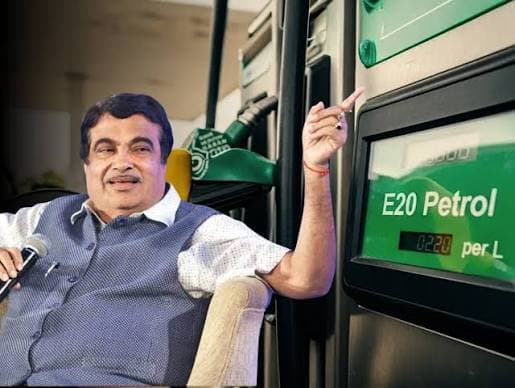
NewsUnion Minister Nitin Gadkari has fiercely defended India's E20 ethanol blending mandate, calling criticism 'sponsored propaganda,' even as vehicle owners worry about fuel efficiency and engine longevity. We break down the government's stance and what this standard fuel means for your daily drive and long-term car care.
 News
NewsMaruti Suzuki has officially opened bookings for the highly anticipated Brezza facelift, inviting enthusiasts to reserve their updated compact SUV for a token amount of Rs 11,000. Set for a grand debut on July 24, the new Brezza promises a significant refresh, poised to redefine its segment with an array of exterior and interior enhancements.