Did you know?
Airbags inflate in about 25 milliseconds — faster than you can blink.
AutoThrust India
The latest car launches, in-depth reviews, variant price updates, and expert insights from India's roads.
Did you know?
The world's longest traffic jam stretched over 100 km in China in 2010.
Did you know?
Airbags inflate in about 25 milliseconds — faster than you can blink.
Walk into any pre-owned showroom in Delhi-NCR, Mumbai, or Bengaluru, and the story is immediately obvious. Tucked away in the quietest corners are early-generation Tata Nexon EVs and pre-facelift MG ZS EVs. Their windshields bear slashed price tags that would be unthinkable for their petrol or diesel counterparts. First owners who happily paid eighteen lakh rupees on-road just three years ago are now watching their investments plummet to nearly half that value. It is brutal for them.
But for you, this steep depreciation curve is a massive opportunity. By letting someone else swallow that initial financial hit, you bypass the high acquisition cost of a brand-new electric car and leapfrog straight into ultra-low running costs. If you are facing a daily bumper-to-bumper office commute in choked cities like Mumbai or Bengaluru, a used EV can save you thousands of rupees every single month in fuel bills alone.
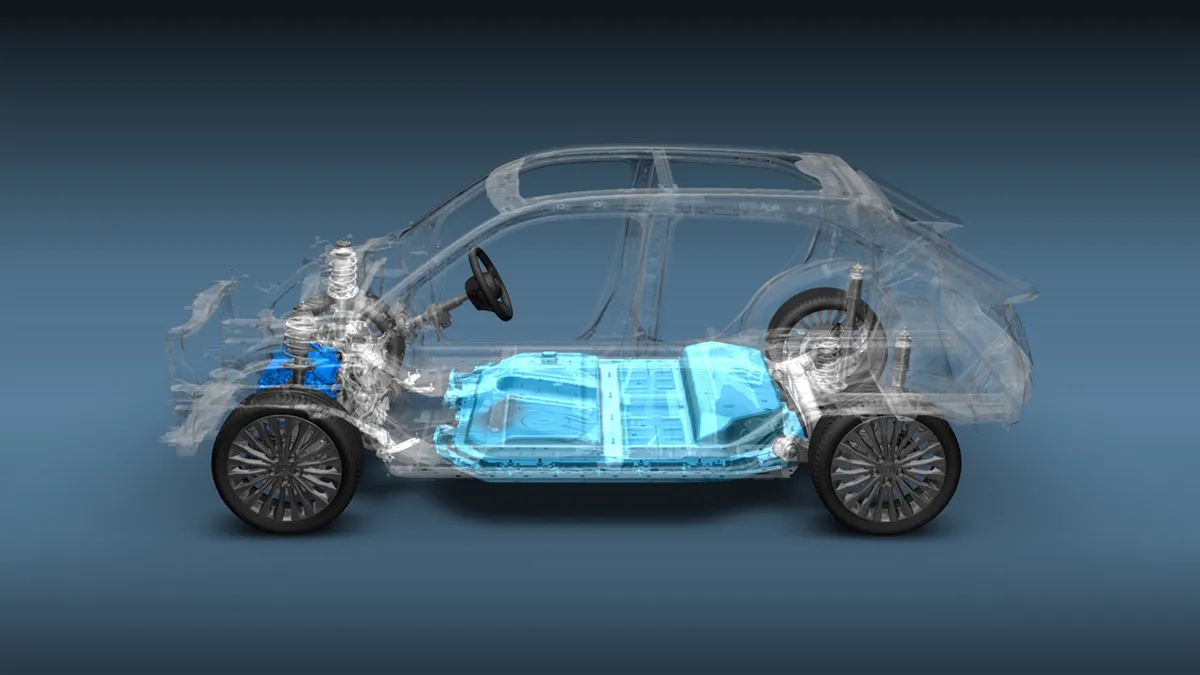
There is a catch, though. In a conventional internal combustion vehicle, a tired engine gives you obvious, noisy warnings. You get blue smoke from the tailpipe, oil puddles on the floor, or a rough, vibrating idle. An EV does none of this. A dying high-voltage battery looks exactly like a pristine, brand-new one from the outside. If you buy a used EV with a degraded battery pack, you are not buying a bargain. You are buying an incredibly expensive, silent, rolling paperweight. To find the genuine deals, you have to look beneath the surface.
Why do these cars lose their value so much faster than petrol or diesel equivalents in India? It is not because they are fundamentally flawed machines. It is a mix of tech anxiety, rapid advancements in newer models, and the looming fear of battery replacement costs.
When an early adopter wants to upgrade, they realize the used market views their three-year-old car the way it views an old smartphone. Newer models landing in showrooms offer superior real-world range, faster charging speeds, and smarter software. This rapid pace of technological evolution makes older models look obsolete to the average buyer, causing valuations to tumble.
Our take is simple: let the original owner pay for that rapid evolution. Purchasing a used Nexon EV Prime or an older MG ZS EV at a forty percent discount is one of the most sensible financial decisions you can make if your daily running is high. While a used petrol automatic SUV will return a painful eight to ten kilometers per liter in heavy city traffic, a used EV will glide through the exact same congestion at a fraction of the cost. The entire equation, however, hinges on one single component: the state of the battery pack.
When you are test-driving a used EV, the battery percentage indicator on the dashboard is completely useless for determining its actual health. That percentage is the State of Charge (SoC). An instrument cluster displaying one hundred percent SoC simply means the pack is fully charged relative to its current capacity. It tells you absolutely nothing about how much that total capacity has shrunk over years of charging cycles and thermal stress.
What you must find is the State of Health (SoH). This is a percentage figure that compares the battery's current maximum capacity against its original capacity when it rolled off the assembly line.
Do not expect to find this number on the car’s infotainment screen, and do not trust standard cheap OBD-II dongles. You must insist on taking the car to an authorized OEM workshop for a full high-voltage diagnostic scan. Treat this as non-negotiable. If a seller or an independent used car dealer hesitates or refuses to let you do this, walk away immediately. There are plenty of other cars on the market.
Once at the workshop, the technician will plug in their official diagnostic tool to generate a battery health report. Here is how to read the SoH numbers:
90% to 100% SoH: Excellent. The battery has minimal degradation. This is typical for cars that are two to three years old with under forty thousand kilometers on the odometer.
80% to 90% SoH: Acceptable. You will get slightly less range than the car originally delivered, but it is still highly usable. Use this drop as a massive leverage point to negotiate a lower buying price.
Below 80% SoH: Tread very carefully. Most manufacturers consider a battery degraded enough for replacement under warranty once it drops below seventy or eighty percent. If the car is outside its warranty period, do not touch it.
While the service technician is running that diagnostic scan, ask them to show you the individual cell voltages. A healthy battery pack consists of dozens of cells working in perfect harmony.
In a healthy pack, the voltage difference between the highest-voltage cell and the lowest-voltage cell should be incredibly small. We are looking for a gap of under twenty millivolts (0.02V) at a high state of charge. If you see a cell deviation of fifty millivolts or more, it means the pack is unbalanced. One or more cells are degrading much faster than the rest. This single weak link will drag down the performance of the entire pack, leading to sudden, unpredictable drops in range when you are out on the road.
In India, most EV manufacturers offer long warranties on their high-voltage battery packs, often stretching to eight years or one lakh sixty thousand kilometers. This warranty is your ultimate safety net, but you must verify that it actually transfers to you as the second owner.
First, go through the service history with a fine-tooth comb. EV batteries require liquid coolant changes at highly specific intervals. If the previous owner skipped even a single scheduled service, or had the car serviced at an unauthorized local garage, the manufacturer has every right to void the battery warranty.
Second, look for aftermarket electrical accessories. In India, it is incredibly common for owners to install aftermarket subwoofers, ambient lighting, or horn upgrades. If the installer spliced into the car's wiring harness to draw power, the high-voltage warranty is almost certainly void. Inspect the engine bay and the area under the dashboard for non-factory wiring or tapped fuses. If you spot any, walk away. Saving fifty thousand rupees on a used car is not worth risking a six-lakh-rupee battery replacement bill.
Indian weather is tough on batteries. We see fifty-degree summers in Delhi, high humidity in Chennai, and deep waterlogging during Mumbai monsoons. The two main battery chemistries sold in India handle these harsh conditions differently.
Used extensively by Tata Motors in the Tiago, Tigor, and Nexon EVs, as well as by BYD, LFP is highly suited to the Indian climate. It is thermally stable, meaning it handles extreme heat well without degrading rapidly. LFP batteries also love being charged to one hundred percent regularly. The downside? LFP chemistry has a very flat discharge curve. This means the car's computer sometimes struggles to estimate the exact remaining range, leading to sudden percentage drops when the battery gets below fifteen percent.
Found in the older Hyundai Kona Electric and the pre-facelift MG ZS EV, NMC batteries offer higher energy density. This translates to more range for less weight. They also provide highly accurate range estimation on the dashboard. However, NMC chemistry is more sensitive to high temperatures. To preserve an NMC battery's life, you should avoid charging it to one hundred percent every day, preferring to keep it capped at eighty percent for daily use.
If your daily routine involves parking under the blazing sun with no shade, an LFP-equipped car is the safer, more durable bet for long-term ownership.
Evaluating a used EV requires a shift in how you value a vehicle. You are not buying a mechanical engine and gearbox; you are buying a battery pack and a rolling software platform. Use the market's fear to your advantage, but verify the physical realities of ownership before parting with your money.
ModelBattery ChemistryReal-World Range (City)Estimated Used Price RangeWho It Is ForTata Tiago EV (24 kWh)LFP160 – 180 km₹6.5 Lakh – ₹8.0 LakhThe urban commuter looking for a nimble, easy-to-park second car.Tata Nexon EV Prime (30.2 kWh)LFP180 – 200 km₹8.5 Lakh – ₹10.5 LakhFamilies wanting a robust, high-ground-clearance city SUV.MG ZS EV (44.5 / 50.3 kWh)NMC / LFP280 – 340 km₹11.5 Lakh – ₹15.0 LakhHighway commuters who need premium cabin quality and longer legs.Hyundai Kona Electric (39.2 kWh)NMC220 – 250 km₹9.0 Lakh – ₹11.0 LakhEnthusiasts who appreciate sharp handling and do not mind tighter rear seat space.
Note: These prices are approximate market estimates and can vary significantly based on your city, local RTO taxes, and the car's overall condition.
When negotiating the purchase, do not let the seller keep the home charging unit. Every EV comes factory-equipped with a portable charging cable (usually a 15A three-pin plug charger) and a faster wall-box charger (typically 3.3 kW or 7.2 kW). Make sure both are part of the deal. If the wall-box charger is still mounted on the seller's apartment wall, negotiate who pays for the decommissioning and reinstallation at your home. A new OEM wall-box charger can easily cost upwards of twenty-five thousand rupees if purchased separately.
Beyond the charger, verify that your apartment building's housing society or your independent home has the necessary electrical load capacity. Upgrading your home's sanctioned electrical load from the local power discom (like BESCOM, MSEDCL, or Tata Power) is a straightforward process, but it requires paperwork and a small fee.
Buying a used electric vehicle in India is no longer a fringe gamble. It is a highly calculated, financially rewarding move if you stick strictly to the rules. Here are our decisive recommendations based on your needs:
The Budget City Runabout: Tata Tiago EV If you want an affordable entry point into electric mobility for your daily city run, look for a two-year-old Tata Tiago EV. It is compact, incredibly cheap to run, and easy to weave through tight city lanes. We advise avoiding the smaller nineteen kilowatt-hour battery variant if you can; the larger twenty-four kilowatt-hour version gives you that extra range cushion needed when unexpected detours pop up.
The All-Rounder Family Car: MG ZS EV (Pre-Facelift) If you have a budget of around twelve to thirteen lakh rupees, skip the new compact hatchbacks and buy a used pre-facelift MG ZS EV. The build quality is vastly superior to domestic rivals, the rear seat is spacious, and the real-world range easily clears the two hundred and eighty kilometer mark. It handles occasional highway runs with ease, and MG's service network has a surprisingly good reputation for handling EV-related issues.
The High-Mileage Commuter: Tata Nexon EV Max For those who drive fifty kilometers or more every single day on outer ring roads or bypasses, seek out a Tata Nexon EV Max. The larger forty point five kilowatt-hour battery pack, coupled with faster fast-charging capabilities, makes it an incredibly versatile workhorse. Just ensure you get that official battery health diagnostic printout showing the SoH and cell voltages before signing the transfer papers.
 News
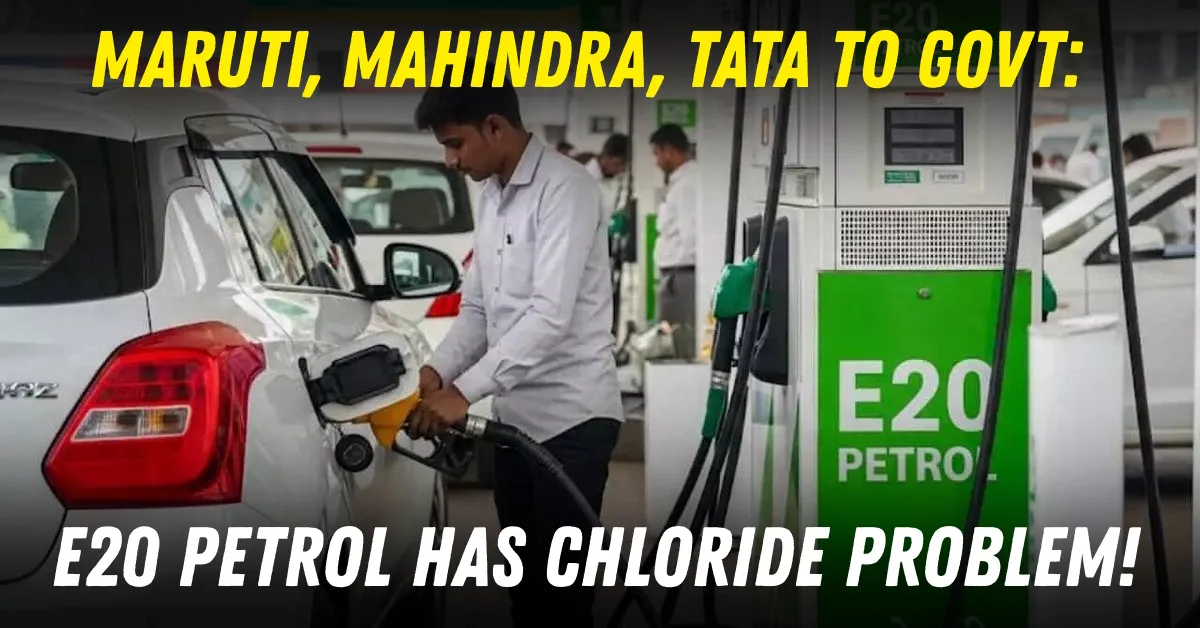
NewsIndia's biggest automakers — Maruti, Tata, Mahindra, and SIAM — have collectively raised a serious red flag: 'chloride issues' in E20 petrol. This isn't just a technical footnote; it's a direct challenge to E20's reliability and could impact your car's longevity and value.
 Buying Guides
A veteran journalist's guide to choosing family cars in India. Skip the brochure gimmicks and learn the truth about real boot space, ISOFIX child safety, and ride comfort.
 Buying Guides
Demystifying the real cost of buying a car in India. Learn the truth about ex-showroom markups, automatic gearboxes, NCAP safety, and how to negotiate with dealers.
You cannot rely on the dashboard State of Charge (SoC) or cheap OBD-II dongles. You must take the car to an authorized OEM workshop for a professional high-voltage diagnostic scan to get the exact State of Health (SoH) percentage.
An SoH of 90% to 100% is excellent, typically found in cars under forty thousand kilometers. Between 80% and 90% is acceptable but useful for price negotiations. Avoid any used EV with an SoH below 80% if it is outside warranty.
Yes, EV battery warranties of eight years or 1.6 lakh kilometers generally transfer. However, the warranty is void if the previous owner missed scheduled services, skipped coolant changes, or installed aftermarket accessories that spliced into the factory wiring harness.
LFP chemistry is highly suited for India because it is thermally stable and handles extreme heat well. NMC chemistry offers higher energy density but is more sensitive to high temperatures and should not be charged to 100% daily.