Did you know?
The world's longest traffic jam stretched over 100 km in China in 2010.
AutoThrust India
The latest car launches, in-depth reviews, variant price updates, and expert insights from India's roads.
Did you know?
The average car has around 30,000 individual parts.
Did you know?
The world's longest traffic jam stretched over 100 km in China in 2010.
Walking into an Indian car dealership is a sensory assault. The sterile glow of LED spotlights, the faint scent of synthetic leather, and the rehearsed pitch of a sales advisor who insists that the top-spec variant is just a tiny bump in your monthly EMI. For a first-time buyer, this is where the mistakes begin. It is easy to get swept up in the showroom theater. Before you know it, your sensible budget has dissolved into a seven-year loan for features you will probably never use.
We have spent over a decade analyzing how cars are bought, driven, and sold across India. We have sat in bumper-to-bumper gridlocks on Bengaluru's Outer Ring Road, tackled waterlogged underpasses in Mumbai during the monsoon, and stretched the legs of long-legged cruisers on the NH48. Indian roads are a harsh testing ground. They demand cars that are mechanically resilient, thermally efficient, and financially forgiving.
By the end of this guide, you will have a clear, BS-free framework for choosing your first car. We will unpack the real cost of putting a vehicle on the road, dissect the gearbox options that save your left knee, and look past the glossy brochures to find where the real value lies. No marketing fluff. Just practical, road-tested advice.
The biggest trap in the Indian car market is the sticker price. That shiny number printed in bold on the brochure? That is the ex-showroom price. It is a useless figure for your actual financial planning. By the time a car key is handed to you, that price will swell by 15% to 25% depending on where you live.
This massive delta is driven by three main factors: Road Tax (RTO), insurance, and the dealership's creative surcharge list. State RTO rates vary wildly. Buying a hatchback in Karnataka or Maharashtra will cost you significantly more in taxes than registering the exact same vehicle in Himachal Pradesh or Daman.
Then comes the insurance racket. Dealerships routinely inflate insurance quotes by ₹20,000 to ₹40,000. They package it as a non-negotiable bundle, but it is not. You are legally free to buy insurance from any IRDAI-approved provider. When you get a quote from an online aggregator and show it to the sales manager, watch how quickly they drop their 'fixed' dealer price to match it.
Next, watch out for 'handling charges' or 'logistics charges.' These are illegal. The Supreme Court of India and various state RTOs have repeatedly ruled against them. If you see a charge of ₹6,000 to ₹10,000 labeled as logistics, demand its removal. If the dealer refuses, tell them you will raise a complaint with the manufacturer. They will back down.
Finally, ignore the mandatory accessories kit. This is usually a collection of low-grade floor mats, chrome garnishes that peel off after two heavy rains, and a perfume dispenser. The dealer will quote ₹15,000 for this bundle. Opt out completely. Go to a reputed aftermarket shop and buy high-quality 7D mats and a decent steering cover for a fraction of that cost.
Our rule of thumb is simple. If your absolute hard budget is ₹10 lakh on-road, your ex-showroom target should be no more than ₹8.2 lakh. Keeping this buffer ensures you are not financially compromised before your first service is even due.
Choosing a gearbox used to be simple. You bought a manual unless you had a physical limitation. Today, with urban traffic slowing to a crawl in every major Indian city, buying a manual for daily commuting is a form of self-inflicted torture. But not all automatics are built equal. Let us break down the choices.
First, you have the Automated Manual Transmission (AMT). Brands like Maruti Suzuki, Tata, and Hyundai use these heavily in their entry-level cars. Mechanically, an AMT is just a manual gearbox with a robotic actuator shifting gears for you. It is cheap to produce and highly fuel-efficient. The catch? The 'head-nod' effect. When you accelerate, there is a distinct, frustrating pause while the electronics swap gears. If you drive gently, it is manageable. If you try to overtake quickly on a two-lane highway, it can be downright unnerving.
Next is the Continuously Variable Transmission (CVT). This is the gold standard for smooth city driving. CVTs use a belt and pulley system, meaning there are no physical gears to shift. The power delivery is linear and buttery smooth. The downside is the rubber-band effect. Step hard on the throttle, and the engine revs scream ahead while the car takes a moment to catch up. For relaxed commuters, a CVT (like the one in the Honda Amaze) is spectacular.
Then there is the Torque Converter. This is the oldest, most reliable automatic tech. It is smooth, durable, and handles heavy loads well. However, they are traditionally less fuel-efficient than CVTs or AMTs.
Finally, the Dual-Clutch Transmission (DCT or DSG). These are high-tech, lightning-fast gearboxes that offer sports-car-like shifts. They are fantastic on the highway. But put a dry-clutch DCT in a bumper-to-bumper Mumbai crawl, and you are asking for trouble. The constant creeping in traffic causes the clutches to slip and overheat, leading to expensive failures down the line. frankly, skip it if your daily route looks like a parking lot.
Our take is clear. If you drive 80% of your time in heavy city traffic, spend the extra money on a CVT or a well-tuned Torque Converter. If your budget is tight, an AMT is a compromise you can live with, but test drive it thoroughly first to see if you can tolerate the shift pauses. Skip dry-clutch DCTs unless you have a healthy highway commute.
Indian buyers are finally waking up to vehicle safety. This is a massive positive shift. But safety is more than just a five-star sticker on the rear windshield.
When evaluating a car's safety, look at the Global NCAP (GNCAP) or Bharat NCAP (BNCAP) scorecard details. Do not just look at the headline stars. Look closely at the 'bodyshell integrity' rating. If the report says the bodyshell is 'unstable' and 'not capable of withstanding further loadings,' that five-star rating has caveats. You want a vehicle with a stable structure.
Also, distinguish between active and passive safety features. Passive safety (airbags, crumple zones) protects you during a crash. Active safety (Electronic Stability Control, ABS, Traction Control) helps you avoid the crash in the first place.
Electronic Stability Control (ESC) is arguably more important than having six airbags. If you have to swerve suddenly at 80 km/h on a wet highway to avoid a stray dog or a rogue pothole, ESC is the technology that keeps your car from spinning out of control. Ensure whatever car you choose has ESC as standard.
Do not fall for the 'heavy door' myth. We often see buyers in showrooms slamming doors, believing that a heavy clunk equates to safety. Sheet metal thickness has very little to do with crash protection. What matters is the high-strength steel used in the hidden skeleton of the car—the A-pillars, B-pillars, and side impact beams. Trust crash test data, not showroom door slams.
The Indian market has gone SUV-mad. Every manufacturer is calling everything with more than 160mm of ground clearance an SUV. Let us demystify these segments.
Hatchbacks: The sensible starting point. They are incredibly easy to park in cramped apartment basements and offer great fuel economy. Their lower center of gravity also means they handle better on highways than high-riding mini-SUVs.
Compact Sedans: The forgotten value-for-money segment. Cars like the Honda Amaze offer massive boot space and superior rear-seat comfort compared to sub-four-meter SUVs at a lower price point. If you do frequent weekend trips with family and luggage, do not overlook the sedan.
Sub-Four-Meter SUVs: These are essentially tall hatchbacks. They offer a high seating position, which gives you a commanding view of the road, and excellent ground clearance to tackle broken streets and monsoons. However, they carry a price premium over equivalent hatchbacks without offering significantly more cabin space.
Mid-Size SUVs: If your budget stretches past ₹12 lakh ex-showroom, this segment offers the space, power, and road presence needed for comfortable long-distance touring.
To help you visualize your options, let us compare four of the most sensible, dependable first cars in India. We have selected these based on their reliability, ease of driving, and ownership experience.
| Model | Segment | Approximate Ex-Showroom Range | Key Strength | The Compromise | Our Recommended Variant |
|---|---|---|---|---|---|
| Hyundai Grand i10 Nios | Hatchback | ₹6.0 - 8.5 Lakh | Exceptional cabin fit and finish, buttery smooth engine refined for city use. | Soft highway suspension can feel bouncy at high speeds. | Sportz (Executive) 1.2 Manual or AMT |
| Tata Punch | Sub-compact SUV | ₹6.1 - 10.2 Lakh | Solid 5-star safety rating, tough suspension that ignores bad roads. | Three-cylinder engine feels noisy and sluggish when pushed. | Adventure Rhythm or Accomplished |
| Maruti Suzuki Baleno | Premium Hatchback | ₹6.6 - 9.8 Lakh | Outstanding fuel efficiency, massive cabin space, massive resale demand. | Sheet metal feels light; highway high-speed stability is average. | Zeta 1.2 Manual / AMT (Offers 6 airbags) |
| Honda Amaze | Compact Sedan | ₹7.2 - 10.0 Lakh | Very comfortable rear seat, refined CVT automatic, huge 420-liter boot. | Interior design feels slightly dated compared to newer rivals. | S or VX CVT |
(Note: Prices listed are approximate ranges and subject to state taxes and dealer schemes. Always verify local on-road prices with multiple dealerships.)
Owning a car is a recurring monthly subscription. Your purchase price is just the down payment.
First, let us talk about fuel. If your daily commute is under 30 kilometers, stick to petrol. Diesel engines are facing a slow death in India due to strict BS6 Phase II emission norms. Modern diesels require Diesel Exhaust Fluid (AdBlue) and are equipped with Diesel Particulate Filters (DPF). If you only drive a diesel car in slow city traffic, your DPF will clog up, resulting in warning lights and expensive service center visits. Buy a diesel only if you are doing regular highway runs of 80 kilometers or more.
EVs are fantastic if you have a dedicated parking spot where you can install a home charger. The running cost of an EV is roughly ₹1 to ₹1.5 per kilometer, compared to ₹7 to ₹9 per kilometer for a petrol car. However, do not buy an EV as your primary car if your lifestyle involves frequent, unplanned interstate road trips into rural areas where public charging infrastructure is still unpredictable.
Then there is the service network. Maruti Suzuki and Hyundai remain the undisputed kings of service reach. You can find a mechanic who knows their way around a Swift or an i10 in the remotest corner of Ladakh.
Tata and Mahindra have improved their products massively, but their service quality remains a coin toss. You might get a stellar service manager who resolves issues quickly, or you might find yourself visiting the workshop thrice to fix a simple squeaking dashboard. If you lack patience for dealership follow-ups, stick to the Japanese or Korean brands for your first car.
Lastly, consider resale value. In India, a car is still treated as an asset. Brands like Maruti Suzuki and Toyota retain their value incredibly well. A five-year-old WagonR or Baleno will find buyers within hours on the used market. Quirky or less mainstream models will depreciate like a stone.
Once you have picked your car, the real work begins at the showroom desk. Never show excitement. The moment a salesperson knows you are in love with a specific car, your leverage evaporates.
Always get written quotes from at least two different dealerships, even if they belong to the same parent group. Take Dealer A's quote, walk into Dealer B, and ask them to beat it. They almost always will.
Focus on the insurance premium. As mentioned earlier, dealers make a massive margin here. Tell them, 'I have a quote from an external insurer for ₹28,000. If you can match it, I will take the policy from you. Otherwise, remove your insurance charge from the invoice.'
Be strategic with timing. Dealerships have monthly, quarterly, and annual sales targets. Buying a car in the last week of any month—especially in March (financial year-end) or December (calendar year-end)—will net you the highest discounts. However, keep in mind that a car manufactured in December will have a slightly lower resale value later than one manufactured in January of the next year, even if bought only weeks apart.
No single car is perfect for everyone. Your choice must align with your primary use case. Here are our definitive, road-tested recommendations:
For the Bumper-to-Bumper City Commuter: We recommend the Honda Amaze CVT. Yes, it is a sedan in an SUV-crazy world, but the combination of the smooth 1.2-liter engine and the CVT automatic is unmatched for stress-free urban driving. Your left leg will thank you, and your family will love the plush ride quality.
For the Safety-Conscious First-Time Family: Go with the Tata Punch. It is compact enough to maneuver through tight lanes, has the ground clearance of a proper utility vehicle, and boasts a reassuring 5-star safety rating. Opt for the manual version if you can, as the AMT can feel frustratingly slow.
For the Maximum Value and Peace-of-Mind Buyer: Choose the Maruti Suzuki Baleno. It offers space that rivals cars from a segment above, delivers spectacular fuel economy, and is backed by a service network that never sleeps. Opt for the Zeta variant, which packages essential safety features like six airbags and ESC at a sensible price point.
 Buying Guides
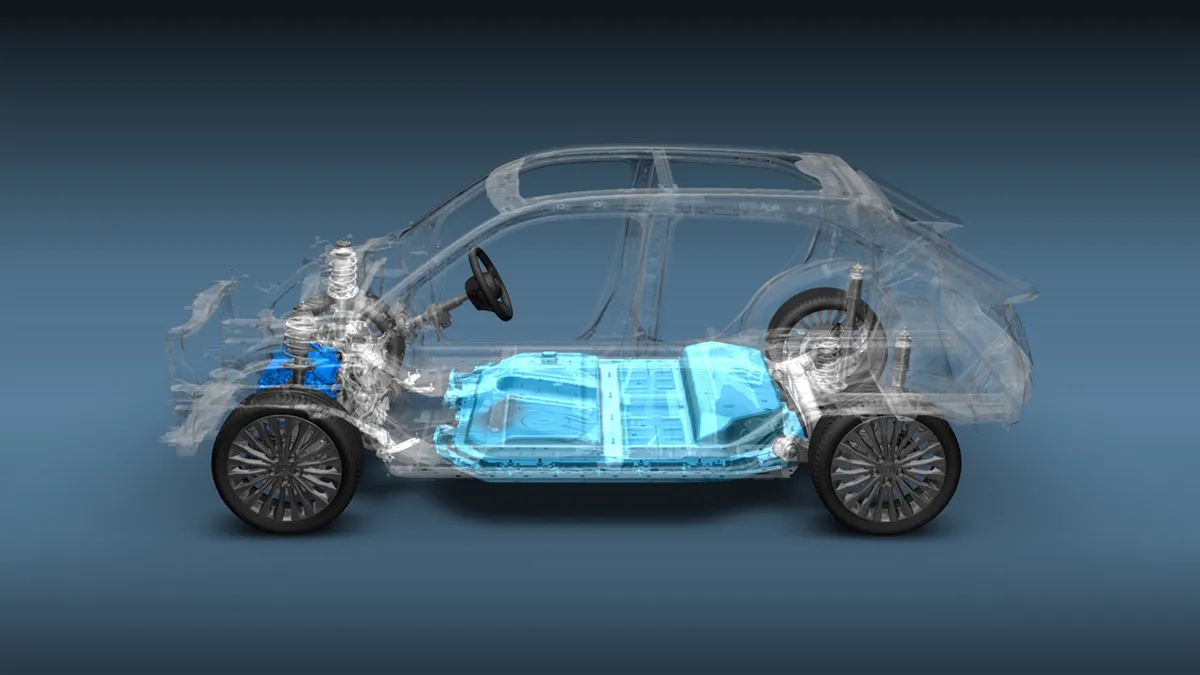
Used electric cars are depreciating fast in India. Here is how to find a high-quality pre-owned EV, run diagnostics on the battery, and avoid massive replacement bills.
 News
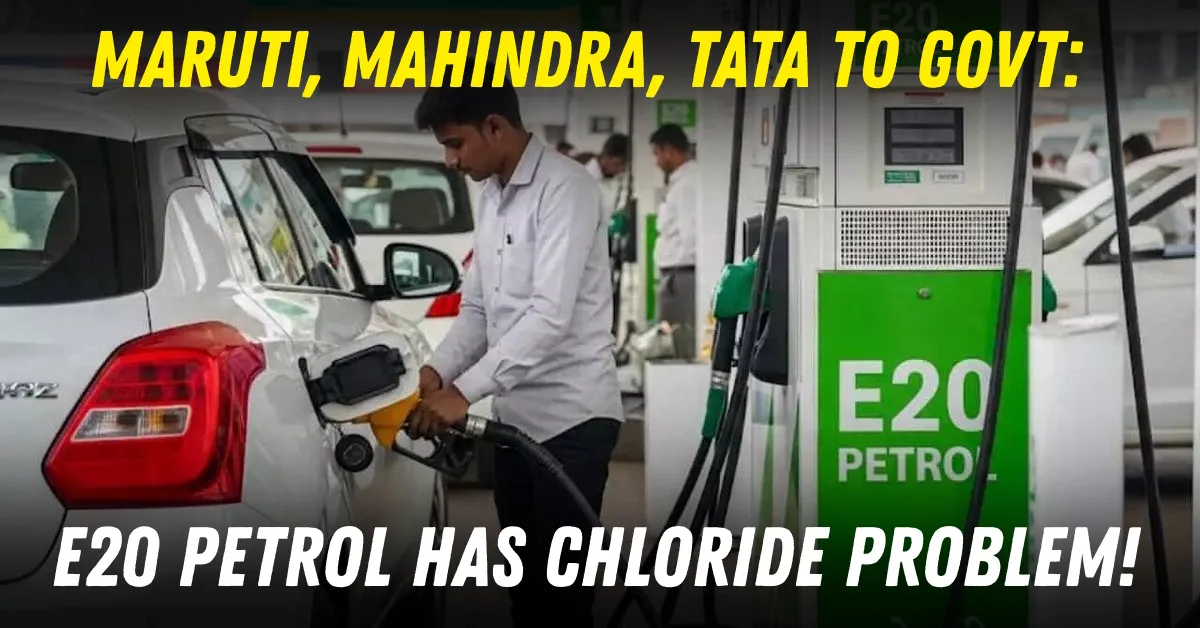
NewsIndia's biggest automakers — Maruti, Tata, Mahindra, and SIAM — have collectively raised a serious red flag: 'chloride issues' in E20 petrol. This isn't just a technical footnote; it's a direct challenge to E20's reliability and could impact your car's longevity and value.
 Buying Guides
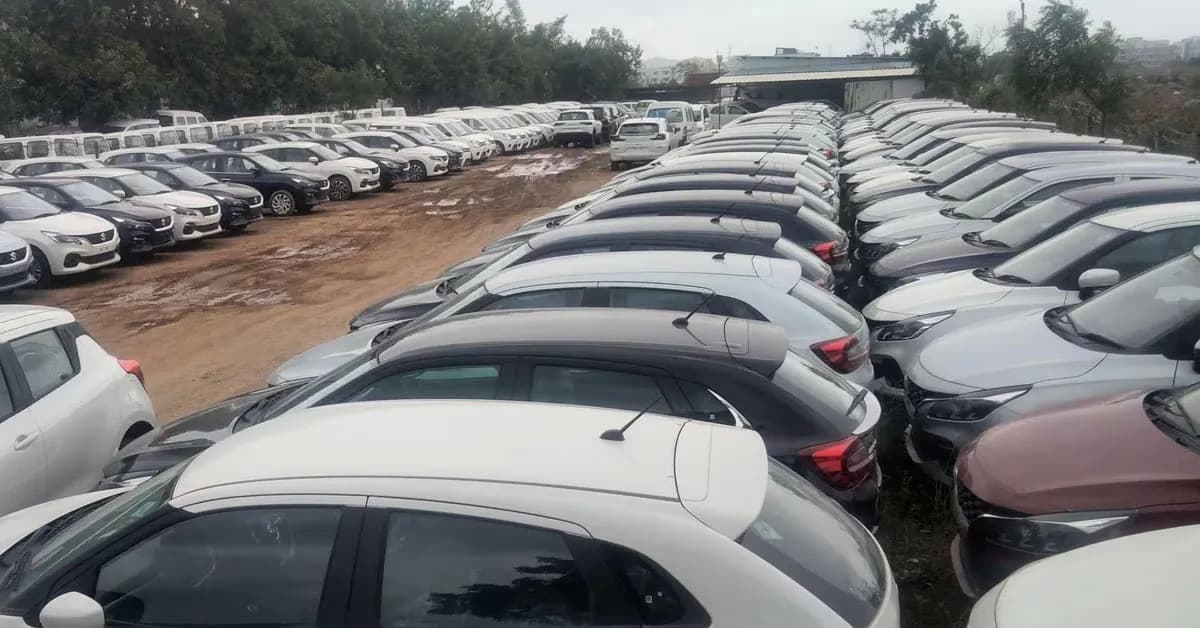
A veteran journalist's guide to choosing family cars in India. Skip the brochure gimmicks and learn the truth about real boot space, ISOFIX child safety, and ride comfort.
On-road prices in India are typically 15% to 25% higher than ex-showroom prices. This increase includes lifetime road tax, registration fees, mandatory third-party insurance, fastag, and other handling fees. The exact percentage depends heavily on your state's tax slabs and the vehicle size.
AMTs are great for cost-effective city commuting but can feel frustrating on highways. The gear shifts have a noticeable delay, known as the head-nod effect. For frequent highway trips, a CVT, Torque Converter, or manual gearbox is much better for safe overtaking.
Yes, you can legally buy insurance from any IRDAI-approved provider. Showrooms often bundle inflated insurance policies, but you have the right to decline them. Getting an external quote online and asking the dealer to match it can save you up to ₹30,000.
No. Modern BS6 Phase II diesel cars have particulate filters that clog easily in bumper-to-bumper city traffic, leading to expensive repairs. Buy a diesel only if your monthly running exceeds 1,500 kilometers, with a significant portion on open highways.