Did you know?
India is the world's third-largest automobile market by sales.
AutoThrust India
The latest car launches, in-depth reviews, variant price updates, and expert insights from India's roads.
Did you know?
The Porsche 911 has kept its rear-engine layout for over 60 years.
Did you know?
India is the world's third-largest automobile market by sales.
Every car buyer in India eventually stares down the same question: with so many powertrain options, which one actually makes financial sense for me? The market, quite frankly, bombards us with claims of efficiency, performance, and future-proofing. What's often missing, though, is a clear, no-nonsense answer tailored to your specific driving habits and the real-world costs of ownership in India.
At AutoThrust India, we’ve tracked this market for over a decade. We know the Bengaluru crawl, the Mumbai monsoon, and the long, unforgiving stretches of NH48. We understand that a car isn't just an ex-showroom price; it's the on-road cost, the relentless monthly fuel or electricity bills, service intervals that pop up sooner than you expect, and that eventual resale value. This isn’t a theoretical exercise; this guide is designed to help you definitively choose the best option – petrol, strong hybrid, or electric – not just for today, but for the years you'll own your vehicle, framed by how much you actually drive each month.
At its heart, the petrol vs. hybrid vs. EV debate is a balancing act. It's almost always about how quickly (or if) the savings in running costs can genuinely offset a higher initial premium. This 'payback period' is critical, and it hinges almost entirely on how many kilometres you clock each month. We're not just talking about fuel or electricity here; we factor in service, insurance, and the ever-present shadow of depreciation and resale value.
Petrol cars, the bedrock of our market, typically demand the lowest upfront investment, making them incredibly accessible. Their running costs, however, are the highest, largely due to fuel prices. Electric Vehicles (EVs) flip this script entirely: a significant upfront premium but remarkably low running costs. Strong Hybrids aim to carve a middle path, offering better fuel efficiency than pure petrol, albeit with a higher initial price tag.
Your job is to figure out if that initial premium on a hybrid or EV justifies itself within your ownership period. If it doesn't, you're essentially paying more for something that won't deliver a return. Let's break down these real-world scenarios.
Forget generalisations. The economic viability of your car is directly proportional to how much you drive. We've categorised Indian drivers into broad mileage brackets, because frankly, this is the real decider:
Low Usage (Under 500 km/month): Think weekend drives, short city commutes, or a secondary family car. Here, the upfront cost truly is king.
Medium Usage (500-1000 km/month): This is for regular daily city commutes and occasional inter-city trips. This is the sweet spot where running cost differences start to matter.
High Usage (1000-1500 km/month): Daily long commutes, frequent highway use, or a primary family car that sees a lot of action. Efficiency becomes paramount here.
Very High Usage (Over 1500 km/month): Extensive daily driving, potentially commercial use, or someone who practically lives on the highway. For this group, efficiency isn’t just important; it's paramount.
To make this concrete, let's consider the popular compact SUV segment (think Maruti Brezza/Grand Vitara, Tata Nexon EV, etc.). These are representative of what many Indian families buy. We'll compare typical running costs for these vehicle types. Remember, these figures are illustrative; fuel/electricity prices and service costs fluctuate, so always check current market rates.
Here’s how the numbers typically stack up for a compact SUV in India, based on our decade of market observation. Note that these are approximations and can vary wildly with driving style, city-specific rates, and the exact model chosen.
Fuel TypeApprox. On-Road Price (₹ lakh)Running Cost/km (Fuel/Electricity)Approx. Service Cost/kmTotal Illustrative Running Cost/kmPetrol11 – 15₹7.5 – ₹8.5₹0.5 – ₹0.8₹8.0 – ₹9.3Strong Hybrid15 – 19₹4.5 – ₹5.5₹0.7 – ₹1.0₹5.2 – ₹6.5Electric (EV)16 – 22₹0.8 – ₹1.2 (home charging)₹0.2 – ₹0.5₹1.0 – ₹1.7
Figures are approximate and vary based on exact model, driving style, city fuel/electricity rates, and service packages. Petrol assumed at ₹100/litre, Home EV charging at ₹8/unit. Public charging costs are significantly higher for EVs.
These numbers clearly show the inverse relationship: as upfront cost generally rises from petrol to EV, the per-kilometre running cost plummets. The crucial question, then, is whether your driving habits allow you to capitalize on those running cost savings.
Petrol cars are the bedrock of the Indian market for a reason. They're typically the cheapest to buy upfront, the technology is well-understood, service networks are extensive even in remote areas, and refuelling takes mere minutes. There’s no range anxiety, no charging infrastructure concerns, and frankly, a comforting familiarity.
Why it works for some: If you drive under 500 km a month, or even up to 700-800 km, the higher upfront cost of a hybrid or EV might simply never pay itself back over a typical 5-7 year ownership period. The initial savings are substantial, freeing up capital for other needs. Models like the Maruti Swift, Hyundai i20, or Tata Punch are excellent for this segment.
Where it struggles: Beyond 1000 km/month, petrol cars start bleeding money. Fuel prices in India are volatile and consistently high. Emissions are also a concern, especially in polluted urban centres. Long-term running costs become a heavy burden, often outweighing any initial savings.
Our Take: For the first-time buyer, the city runabout with minimal daily usage, or as a second car, petrol remains the sensible, wallet-friendly choice. Don't overthink it if your usage is truly low; the numbers simply don't justify the premium for alternatives.
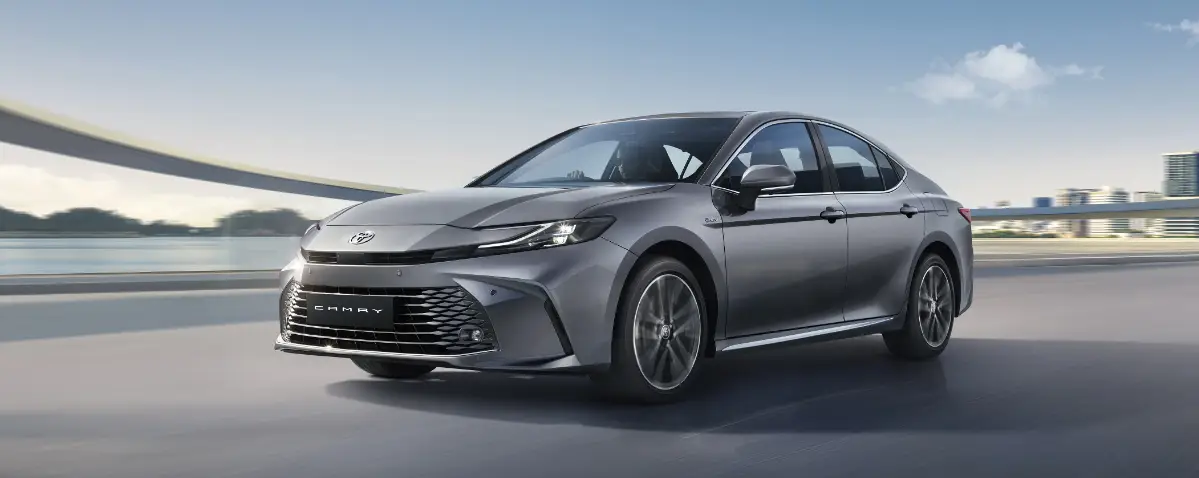
Strong hybrids (and let's be clear, we're not talking about mild hybrids here) offer a compelling proposition: significantly better fuel efficiency than petrol cars, especially in the relentless stop-and-go of city traffic, and critically, without the need for external charging. They use a combination of an internal combustion engine and an electric motor, with the car automatically switching modes for optimal efficiency. Think of it as an EV that charges itself while you drive, offering a seamless experience.
Why it works for many: If your monthly mileage is consistently in the 800-1500 km range, and a good chunk of that is within congested cities, a strong hybrid shines. The Toyota Hyryder, Maruti Grand Vitara Hybrid, or Honda City Hybrid can deliver genuinely impressive city mileage figures, often above 20 kmpl. The running cost savings over a petrol car become tangible enough to justify some of that upfront premium, with a payback period potentially between 5-8 years for high city users.
Where it struggles: The upfront cost is a substantial ₹4-7 lakh higher than an equivalent petrol variant. On open highways, where the electric motor assists less, the efficiency advantage diminishes. Also, model choices are still limited, and the technology is more complex, potentially leading to higher long-term maintenance costs, though this is yet to be fully established in the Indian context.
Our Take: A strong hybrid is a smart choice for the discerning buyer who clocks significant city kilometres and wants the best possible fuel efficiency without the commitment to EV charging infrastructure. It's a bridge technology that works exceptionally well right now, particularly for the urban Indian driver.
EVs represent the cutting edge, promising incredibly low running costs, silent operation, instant torque, and zero tailpipe emissions. The government is pushing for EV adoption, and infrastructure is slowly, but surely, expanding across India.
Why it works brilliantly: If your monthly usage consistently exceeds 1500 km, and crucially, if you have dedicated home charging, an EV’s running costs are unbeatable. A compact EV SUV like the Tata Nexon EV or Mahindra XUV400 can cost less than ₹1.5/km to run from home, making the payback period on its higher upfront cost (₹5-8 lakh over petrol) surprisingly quick – potentially 3-5 years for very high usage. Maintenance is also significantly lower due to fewer moving parts. The driving experience is refined and smooth, perfect for city traffic.
Where it struggles: The high upfront purchase price remains the biggest barrier. Range anxiety is very real for those frequenting highways without reliable charging points. While home charging is economical, public fast charging can be expensive, and availability varies wildly. Battery degradation and the long-term cost of battery replacement (though often covered by long warranties) are concerns for some buyers, affecting future resale value. Charging times, even with fast chargers, are still substantially longer than refuelling a petrol car. And frankly, if you don't have dedicated parking with charging, an EV is often an inconvenient proposition in a country like India.
Our Take: EVs are fantastic for the high-mileage urban commuter with home charging access, or the early adopter committed to sustainability. For others, particularly those with frequent long-distance travel or no reliable home charging, the compromises might still outweigh the undeniable benefits.
Numbers tell one story, but real-world ownership in India is often another entirely. Several other factors influence your total satisfaction and actual cost, often more than you'd think.
Service Network & Expertise: Petrol cars have ubiquitous service centres; you’ll find one almost anywhere. Strong hybrids leverage existing petrol infrastructure but require specialised hybrid components and technicians. EVs demand dedicated, highly trained technicians and specific equipment, and their network, while growing, is still evolving. You must ensure your chosen EV brand has a strong service presence and capable staff in your area.
Resale Value & Depreciation: Petrol cars have predictable depreciation curves. Strong hybrids are newer in volume, so long-term resale data is still maturing, but early indicators are good due to their efficiency and versatility. EVs are a wild card; rapid technological advancements (think better batteries, faster charging) could impact older models’ values significantly. Buyer apprehension about battery health can also make resale tricky. However, strong market demand and brand reputation (like Tata's EV offerings) can counter some of these concerns.
Performance & Driving Experience: This is subjective but crucial. EVs offer silent, instant torque and a smooth drive, ideal for cutting through city traffic. Hybrids provide a seamless transition between power sources, very refined in urban cycles. Petrol cars, of course, offer familiar engine notes and predictable power delivery. Test driving is non-negotiable to understand what suits your driving style and preferences.
Infrastructure: The Home Charging Imperative: Petrol pumps are everywhere; it's a non-issue. EV charging, while growing, is still sparse outside major metros and key highways. Home charging isn't just convenient; it's practically a necessity to maximise an EV's economic advantage. Relying solely on public charging can quickly erode your running cost savings due to higher per-unit prices and often inconvenient locations. Without a reliable home charging solution, an EV loses a significant part of its appeal and financial logic.
Let's cut to the chase and recommend based on typical Indian buyer needs, drawing from our experience:
Usage: Under 700 km/month.
Priority: Lowest possible upfront cost, absolute ease of ownership.
Our Recommendation: Petrol.
Why: The lower initial outlay for a car like the Maruti Swift, Hyundai Grand i10 Nios, or Tata Punch is hard to beat. The running cost difference simply won't justify the premium of a hybrid or EV within your typical ownership period. Resale is predictable, service is universal, and daily hassle is minimal. Don't get swayed by high-tech options if your budget is tight and usage is limited; the value simply isn't there yet for you.
Usage: 700 – 1200 km/month, mostly city, occasional highway.
Priority: Excellent fuel economy, comfort, practicality without charging hassles.
Our Recommendation: Strong Hybrid.
Why: For this usage pattern, especially if city driving dominates, a strong hybrid like the Maruti Grand Vitara Hybrid or Toyota Urban Cruiser Hyryder makes immense sense. The excellent city mileage will significantly reduce your monthly fuel bill, and the absence of charging worries means you get the best of both worlds. The premium starts to pay for itself around the 5-7 year mark, and the refinement is a significant bonus. If your city driving is intense, this is undoubtedly your best bet to save money without major lifestyle changes.
Usage: Over 1200 km/month, with a significant portion on highways or long daily commutes.
Priority: Lowest running cost over volume, modern reliability, and a refined experience.
Our Recommendation: Electric Vehicle (EV) with Home Charging.
Why: If you consistently rack up over 1200-1500 km a month, an EV like the Tata Nexon EV Max or Mahindra XUV400 becomes an incredibly compelling financial proposition, provided you have reliable home charging. The running cost savings are so substantial that the upfront premium can be recovered in as little as 3-5 years. The quiet, effortless highway cruising and reduced maintenance make for a superior ownership experience. You’ll need to plan your highway trips around charging points, but for daily long runs, nothing beats an EV's economics, particularly when charging at home.
Choosing the right powertrain in India boils down to a single question: how much do you truly drive each month, and where do you drive it? For low-mileage city users, petrol remains the undisputed king of initial affordability. For the urban warrior clocking medium-to-high city kilometres, a strong hybrid offers the most compelling balance of efficiency and convenience. And for the high-mileage driver with dedicated home charging, the EV's undeniable running cost advantage makes it the most financially shrewd choice in the long run. Don't fall for marketing hype; crunch the numbers against your actual driving habits. That's where your true savings lie.
For very high usage drivers (over 1500 km/month) with home charging, an EV's higher upfront cost can be recovered through running cost savings in as little as 3-5 years. This is due to significantly lower per-kilometre electricity costs compared to petrol.
 Buying Guides
Buying a pre-owned car in India is a financial masterstroke if done right, but the market is a minefield. Our essential 20-point inspection guide is your shield against bad deals, ensuring you know exactly what to look for and how to negotiate.
 News
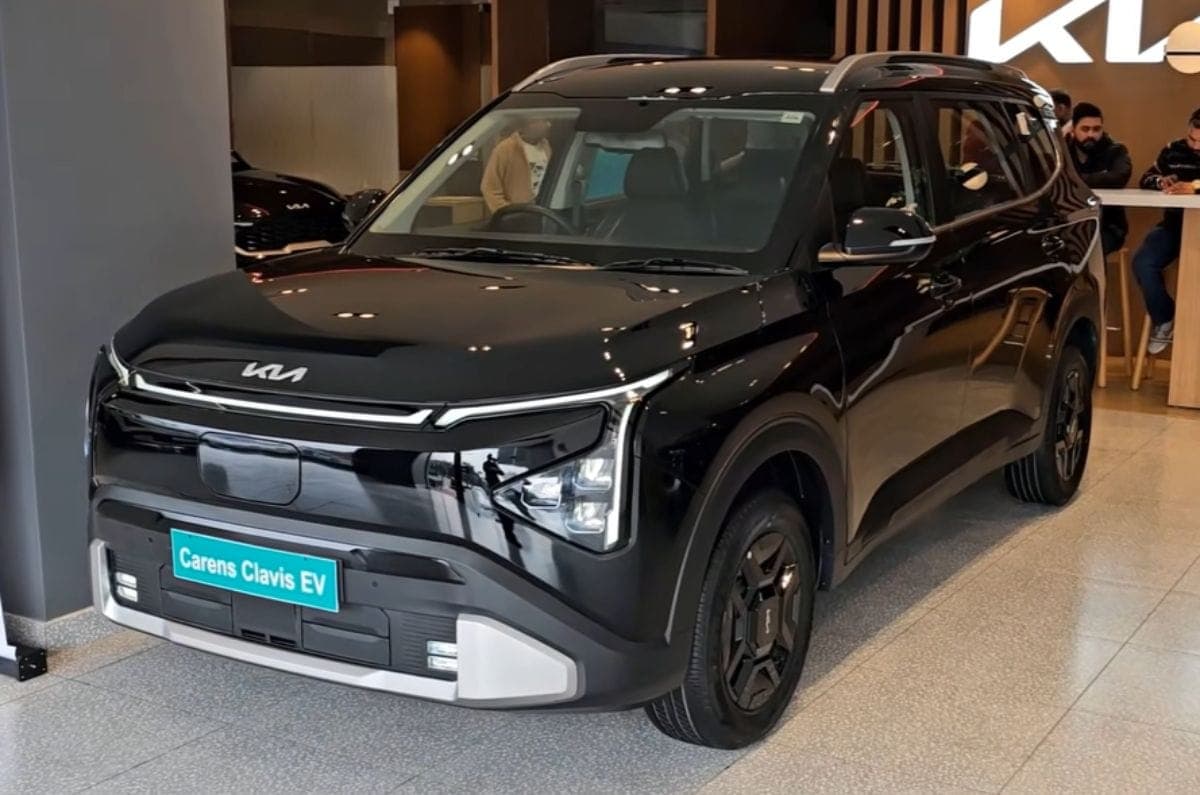
NewsKia India has announced massive monsoon discounts for July 2026, offering benefits of up to Rs 1.8 lakh on popular models including the Carens, Clavis, and its EV range.
 News
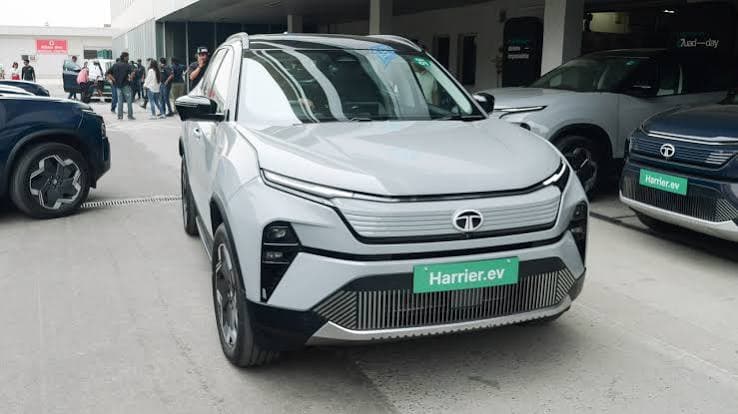
NewsAutoThrust India brings you exclusive news on Tata Harrier EV's unprecedented discounts of up to Rs 2.75 lakh this July 2026. Explore how green bonuses, exchange offers, and loyalty benefits make owning a Harrier EV more accessible than ever, cementing Tata's leadership in India's EV sector.
Yes, strong hybrids shine in city traffic, offering excellent fuel efficiency (often above 20 kmpl) due to their electric motor assistance. They are ideal for monthly mileages between 800-1500 km, especially with frequent stop-and-go conditions.
A petrol car remains the best choice for low-usage drivers, typically under 700 km/month. Their lowest upfront cost means the higher premium of hybrids or EVs may never pay back within a typical ownership period, making them the most economical initial investment.
Yes, home charging is practically a necessity to maximize an EV's economic advantage. While public charging is growing, it can be more expensive and less convenient, potentially eroding the significant running cost savings offered by home charging.