Did you know?
The average car has around 30,000 individual parts.
AutoThrust India
The latest car launches, in-depth reviews, variant price updates, and expert insights from India's roads.
Did you know?
A car's tyres can heat up to over 100°C during hard track driving.
Did you know?
The average car has around 30,000 individual parts.

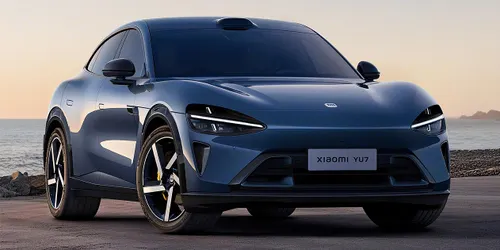
In a historic moment that marks a paradigm shift for the global automotive industry, Xiaomi has achieved the unthinkable. The Chinese tech giant’s high-performance electric vehicle, the Xiaomi YU7 GT equipped with the Track Package, has successfully completed a fully autonomous hot lap of the legendary Nürburgring Nordschleife.
With absolutely no human driver behind the wheel, the performance EV conquered the grueling 20.8-kilometer circuit—often referred to as the 'Green Hell'—in an astonishing 10 minutes and 29.483 seconds. This feat officially crowns the Xiaomi YU7 GT as the first vehicle in history to complete an autonomous lap of this highly complex and dangerous racetrack.
The Nürburgring Nordschleife is widely regarded as the ultimate test of a vehicle’s dynamics, featuring 73 corners, dramatic elevation changes of over 300 meters, and highly unpredictable surface conditions. For a human driver, mastering the Nürburgring takes years of practice. For an autonomous machine, it requires unprecedented real-time computing power, millisecond-level sensor fusion, and lightning-fast actuator response.

During its record-breaking run, the YU7 GT autonomously navigated complex sectors like the Karussell, Fuchsröhre, and the high-speed Döttinger Höhe straight. The vehicle's onboard AI system continuously recalculated the optimal racing line, adjusted braking zones based on tire temperatures, and managed power delivery across its multi-motor setup to maintain maximum traction.
While a lap time of 10:29.483 may not rival human-driven electric supercars, it represents an incredible baseline for driverless technology. Navigating a track where a single software lag or sensor miscalculation could result in a catastrophic high-speed crash is a monumental engineering triumph.
The historic run was made possible by the state-of-the-art mechanical and digital architecture underpinning the YU7 GT. Here is a detailed breakdown of the performance specifications:
Powertrain: Tri-motor electric setup (Dual rear motors, single front motor)
Peak Power Output: 1,025 bhp (combined)
Max Torque: 1,250 Nm
0-100 km/h Acceleration: 2.1 seconds (estimated with Track Package)
Top Speed: 310 km/h (electronically limited for autonomous runs)
Battery Pack: 101 kWh Qilin battery with 800V architecture
Autonomous Hardware: Dual Nvidia Orin-X processors (508 TOPS computing power), ultra-long-range roof-mounted LiDAR, 11 high-definition cameras, and millimeter-wave radars
Chassis Control: Xiaomi Smart Chassis with active air suspension and electromagnetic dampers
This autonomous record is not Xiaomi's first major milestone at the Nürburgring. The tech brand has been aggressively testing its performance EV platforms on the German circuit for several seasons. In May 2026, the YU7 GT platform made its first major dynamic appearance at the Nürburgring, establishing benchmark lap times with professional human test drivers.
Those early runs gathered invaluable telemetry data, suspension load metrics, and thermal profiles. This massive data cache was directly fed into Xiaomi’s autonomous driving neural networks, enabling the AI to simulate thousands of laps before the actual driverless vehicle ever touched the tarmac. This transition from human-driven telemetry to AI execution highlights Xiaomi's rapid development cycle.
While Xiaomi has not officially launched the YU7 GT in the Indian market, global pricing and variants give us an exciting preview of how this technology will be positioned.
Expected to feature a dual-motor setup producing around 670 bhp. This variant focuses on long-range grand touring and daily autonomous commuting, expected to start around $65,000 (approx. ₹54 Lakhs, ex-showroom, excluding duties).
This mid-tier variant adds aggressive aerodynamics, larger carbon-ceramic brakes, and a performance-oriented tri-motor system. Projected price is around $85,000 (approx. ₹70 Lakhs, ex-showroom).
This top-tier performance model features lightweight carbon-fiber body panels, a stripped-out track cabin, upgraded battery cooling systems, and the specialized autonomous track-mapping software suite. This limited-run variant is expected to retail closer to $110,000 (approx. ₹91 Lakhs, ex-showroom).
How does a car drive itself on the limit? Xiaomi’s autonomous track pilot uses localized HD mapping combined with real-time GPS and LiDAR correction to place the vehicle within millimeters of the designed racing line.
Traditional autonomous driving algorithms are designed for safety, comfort, and obstacle avoidance. However, for the Nürburgring run, Xiaomi's software engineers deployed a highly specialized 'Performance AI' algorithm. This software is programmed to induce controlled slip angles, utilize curbs to straighten corners, and execute trail-braking—techniques typically reserved for elite racing drivers.
Xiaomi’s historic autonomous run at the Nürburgring Nordschleife is more than just a marketing stunt; it is a profound demonstration of how far software-defined vehicles have come. It proves that the future of electric mobility is not just about zero emissions, but also about pushing the absolute limits of computational speed and chassis control.
As autonomous algorithms continue to refine their racecraft, we are fast approaching an era where your car can show you the perfect line around a track at race speeds, acting as a digital co-driver to teach you how to drive better. Xiaomi has firmly established itself not just as a smartphone maker, but as a dominant force in the high-performance electric vehicle landscape.
 Buying Guides
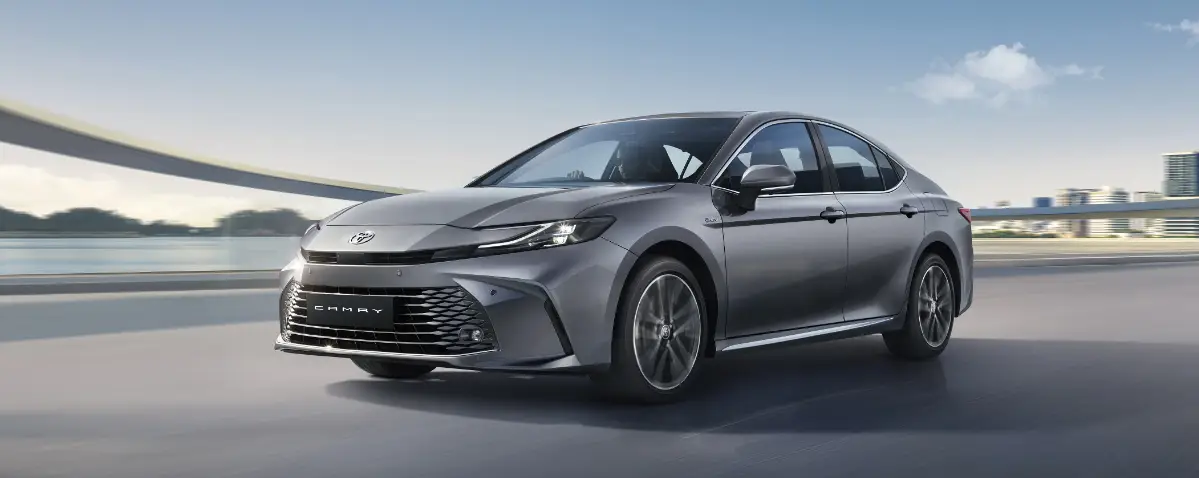
Deciding between petrol, strong hybrid, or EV in India isn't just about the showroom price; it's about your monthly mileage, fuel bills, and long-term value. We cut through the noise with a definitive guide tailored to Indian driving habits.
 News
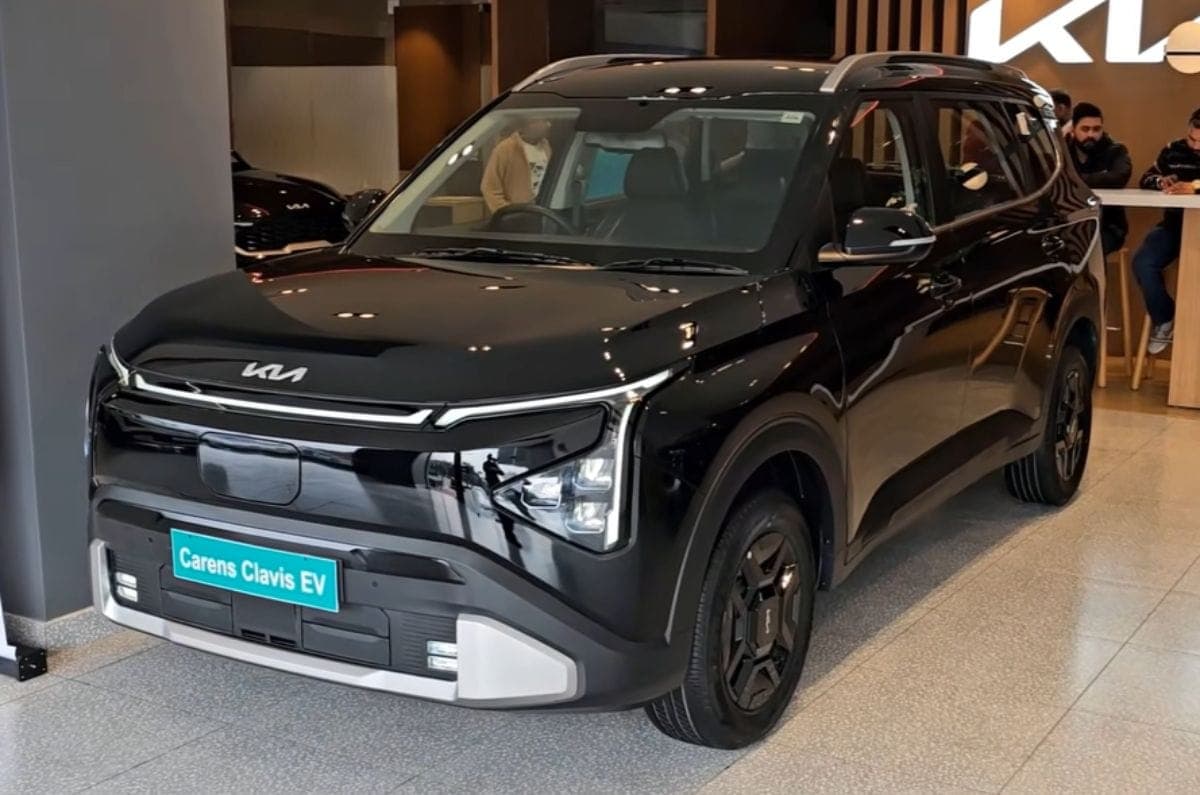
NewsKia India has announced massive monsoon discounts for July 2026, offering benefits of up to Rs 1.8 lakh on popular models including the Carens, Clavis, and its EV range.
 News
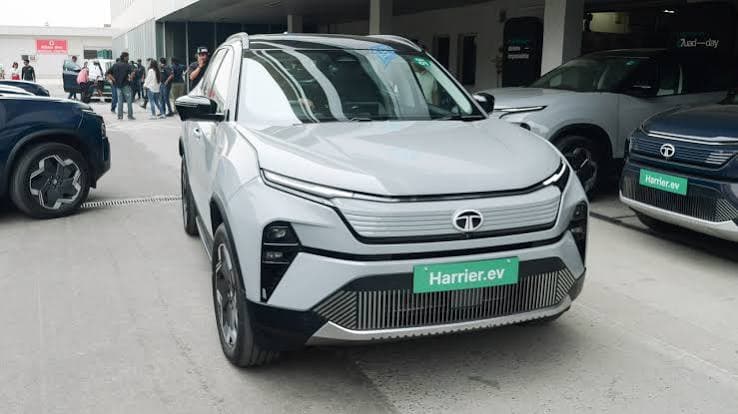
NewsAutoThrust India brings you exclusive news on Tata Harrier EV's unprecedented discounts of up to Rs 2.75 lakh this July 2026. Explore how green bonuses, exchange offers, and loyalty benefits make owning a Harrier EV more accessible than ever, cementing Tata's leadership in India's EV sector.